Last updated November 18, 2026
Free written scope consultation - allowances, timeline, and change-order rules on paper before a single trade is scheduled
The Complete Driveway & Pavers Guide for Vacaville Homeowners
Most driveway paver failures in Solano County aren’t caused by bad materials. They’re caused by contractors who installed a Sacramento spec job on Vacaville soil. You can buy the best paver on the market and still watch it heave, settle, and crack within three summers if the base underneath it was built for soil that doesn’t exist here. The difference between a driveway that lasts thirty years and one that starts shifting in year two usually comes down to what you can’t see once the pavers are down: excavation depth, base compaction, drainage slope, and how honestly the installer accounted for what’s actually under your lot. This guide walks through how Vacaville’s expansive clay and triple-digit summers change the rules, what permits the city actually requires, what materials hold up and which ones fade or move, and what a realistic budget looks like in today’s market.
Quick Answer
A driveway paver installation in Vacaville typically runs $14 to $28 per square foot installed, with most residential driveways landing between $9,000 and $26,000 depending on size, base conditions, and paver selection. The single biggest cost driver isn’t the paver itself: it’s how deep the base has to go to handle Vacaville’s expansive clay soils, which often requires 8 to 12 inches of compacted aggregate instead of the 4 to 6 inches specified in generic California guidance. Get the base right, and the pavers last decades. Skip it, and no paver on earth will save the job.
Styles & brands we work with
- Kitchen remodeling
- Bathroom remodeling
- Home additions & ADU
- Roofing
- Windows & doors
- Driveway & pavers
- Fence
Table of Contents
- Why Vacaville’s Soil Changes the Entire Equation
- Base Depth: What Vacaville Actually Requires
- Which Paver Materials Survive Vacaville Summers
- Slope, Drainage, and Why Flat Lots Fool People
- Vacaville and Solano County Permit Requirements
- What Driveways Cost in Vacaville Right Now
- The Installation Sequence, Step by Step
- Common Mistakes to Avoid
Why Vacaville’s Soil Changes the Entire Equation
Vacaville sits on a specific geology that most paving contractors never bother to look up. Much of the city’s developing ground is dominated by expansive clay soils in the Yolo and Tehama series: soils with high shrink-swell potential that behave dramatically differently depending on moisture. In a dry Vacaville August, this clay shrinks and pulls away from anything sitting on it. After two days of winter rain, it swells back and pushes upward. That cycle repeats every single year.
What this means for a driveway is straightforward. A rigid surface that doesn’t flex with the clay will crack. A flexible surface, like interlocking pavers, can accommodate some of that movement, but only if it’s built with enough base material, correct edge restraint, and proper compaction to distribute the load. We’ve opened up driveways in Vacaville that were installed just four or five years earlier with a 4-inch base and watched them fail exactly where we’d expect: along the apron, at the transition to the garage slab, and in the tire tracks where displacement concentrates.
There’s a second local factor. Vacaville’s clay holds water longer than sandy or loam soils. If the base underneath your pavers isn’t graded to shed water quickly, that moisture lingers, feeds the clay, and accelerates the shrink-swell cycle. A base that would be fine in a drier, sandier market is a slow-motion problem here.
Any contractor quoting you a driveway in Vacaville without first digging a test hole and looking at what’s under your specific lot is guessing. That guess costs you thousands later.
Base Depth: What Vacaville Actually Requires
Standard guidance for residential paver driveways often cites a compacted base of 4 to 6 inches for foot traffic and 6 to 8 inches for vehicle loads. Those numbers assume decent drainage and stable subgrade. On Vacaville clay, that guidance is a starting point at best and outright wrong on worse lots.
Here’s the general range we work from in Vacaville, based on the subgrade we actually encounter:
- Stable, well-draining subgrade: 8 inches of compacted class II aggregate base minimum.
- Moderate expansive clay (most of Vacaville): 10 to 12 inches of compacted base, installed in lifts and compacted to at least 95% Proctor density.
- High shrink-swell clay or heavy organic topsoil: Over-excavation may be necessary. We remove the unsuitable material and replace it with select fill before the base goes in. On severe lots, that means excavating 16 to 20 inches and building back up in lifts.
- Driveway aprons and transitions: These take the highest turning loads and need the most attention. We often add extra base depth at the apron and at the garage slab transition where differential settlement tends to concentrate.
Lift thickness matters as much as total depth. Base aggregate dumped in one thick layer and compacted from the top stays loose in the middle, and loose base is the number one cause of pavers sinking. We install base in 2 to 3 inch lifts with a plate compactor on each layer. That process takes longer. It also tells you why two bids for the “same” driveway can differ by $4,000.
If you’re comparing contractors, ask each one exactly how deep they’re going, how many lifts, and what compaction method they’ll use. A contractor who can’t answer that in specific terms is a contractor who hasn’t thought about your soil.
Which Paver Materials Survive Vacaville Summers
Vacaville runs 100°F-plus days through July and August. Surface temperatures on unshaded pavement routinely hit 140°F or higher. That heat load does specific things to paver materials, and not all of them react the same way.
Concrete pavers
Concrete pavers are the standard choice for Vacaville driveways, and for good reason: they handle heat well, they’re manufactured in consistent sizes, and brands like Tremron and Oldcastle have product lines formulated for hot, dry climates. What separates good from bad is the manufacturing process. Buy pavers with integral pigments, not surface-applied color, and ask about the density of the mix. Higher-density pavers resist the spalling that happens when moisture trapped in the paver expands during a freeze-thaw cycle, which Vacaville does get occasionally in December and January.
Clay brick pavers
Clay brick is naturally inert to UV and holds color indefinitely. The catch is that some clay pavers have higher absorption rates. In Vacaville’s clay, a brick paver that absorbs water also absorbs it from below, which speeds deterioration at the base contact point. If you want brick, buy a paver with a low absorption rate, and seal it on a schedule.
Permeable and interlocking systems
Permeable pavers, from manufacturers like Techo-Bloc, let water drain through the joint spaces and into the base. On Vacaville clay, they can work well as long as the design includes an underdrain or a discharge to daylight. Permeable pavers that just pass water into impermeable clay are a trick that fails silently, flooding your subgrade from underneath. Ask where the water goes before you sign off on a permeable design.
Sealing and fading
Fading in cheap pavers usually isn’t UV damage: it’s efflorescence, a whitish mineral bloom that works its way to the surface from moisture in the base. Sealing helps, but the real answer is fixing the moisture source. Seal concrete pavers after the installation has had a full wet and dry season to settle, typically six to twelve months after install, and reseal every two to three years in Vacaville’s climate.
For the full range of paver options, our Driveway & Pavers in Vacaville page lays out selection details, but the short version is this: buy integrally colored, high-density pavers, and don’t let anyone talk you into a low-density product to save a few dollars a square foot.
Slope, Drainage, and Why Flat Lots Fool People
Vacaville’s valley-floor lots look flat. They aren’t, and treating them as flat is one of the most expensive mistakes an installer can make. A driveway needs a minimum slope of about 1.5% to 2% away from the garage and toward the street, and on a lot that looks dead level, that slope is either nonexistent or running the wrong way.
When a driveway drains toward the house instead of toward the street, water pools at the garage slab, seeps into the interface between pavement and foundation, and starts working on the subgrade. That’s how you get a driveway that settles a half-inch at the apron every year, and foundation moisture issues on top of it.
Here’s what correct drainage design actually involves in Vacaville:
- Shoot the existing grades with a laser level before design. We measure how the lot currently drains and where the low points are.
- Design the new surface to shed water to a defined discharge point. That’s usually the street, but it may be a swale or a drain inlet, depending on the lot.
- Set the finished surface elevation relative to the garage slab. The driveway must sit at or slightly below the slab edge, never above it.
- Install a channel drain or trench drain where ponding is unavoidable. Some Vacaville lots have a genuinely low spot at the apron, and the answer there is a drain, not a steeper slope that makes the grade steep enough to be a hazard.
- Keep the slope under about 12% to 15% for vehicle ground clearance. Steeper, and low-slung cars and delivery trucks will scrape. That’s a real constraint on lots with a short rise to the garage.
We’ve corrected drainage on Vacaville driveways where the previous installation was pitched a full 3% toward the garage. The pavers looked perfect. The foundation underneath was taking on water every winter. The fix meant removing the pavers, rebuilding the base, and re-grading. That’s an expensive lesson, and it’s entirely avoidable if the installer shoots grade first.
Vacaville and Solano County Permit Requirements
Whether you need a permit for a driveway installation in Vacaville depends on scope. Replacing an existing driveway in the same footprint with the same material type and no change to drainage or right-of-way coverage often doesn’t require a building permit. Anything beyond that usually does. The specifics below reflect how Vacaville’s Community Development and Public Works departments typically want to see it; the permitting office has the final word on your specific project.
- Driveway widening or replacement with a new footprint: Generally requires a building permit, plus a grading permit if you’re moving more than a modest amount of soil.
- Improvements within the public right-of-way (driveway apron, curb, gutter, sidewalk): Requires an encroachment permit from the city. These are separate from building permits, and they have their own review process and fees.
- Impervious surface coverage: Vacaville has limits on how much of a lot can be covered by impervious surfaces, and those limits are tighter than they used to be as the city manages stormwater runoff. Adding a wide driveway can push you over the allowed percentage. Confirm the limit on your parcel before designing.
- Grade changes and drainage: If your project changes how water leaves your property in a way that impacts neighbors, expect plan check scrutiny. Stormwater that now flows onto a neighbor’s lot is a complaint waiting to happen and a permit issue on top of it.
- Historic or design review districts: A few of Vacaville’s older neighborhoods have design review requirements. If your lot falls in one, the paver selection and color palette may need approval.
Contractors who tell you permits aren’t needed to save time are contractors who haven’t had to unwind the mess afterward. If the scope crosses into widening, right-of-way work, or impervious coverage changes, the permit is part of the job, and the cost of pulling it should be on the bid in writing.
What Driveways Cost in Vacaville Right Now
Cost estimates outside Vacaville are usually pulled from national averages, and those averages don’t reflect the extra base depth this soil demands. Here’s what we see in the current Vacaville market for typical residential driveways of about 600 to 1,200 square feet.
- Standard concrete paver, installed: $14 to $22 per square foot.
- Premium paver (larger format, integrally colored, higher density from lines like Cambridge Pavers): $18 to $28 per square foot.
- Base excavation and installation: included in per-square-foot pricing above, but ask explicitly. On high-clay lots requiring over-excavation and select fill, add $3 to $7 per square foot.
- Over-excavation and soil replacement: $8 to $16 per square foot for severe high-shrink-swell subgrade, which is uncommon but happens on some Vacaville lots.
- Drainage additions (channel drain, trench drain, or underdrain to daylight): $400 to $1,800 depending on length and whether an outlet exists.
- Edge restraint and curbing: typically included; per-linear-foot charge of $8 to $15 if added separately.
- Permit fees: $200 to $600 for a straightforward residential driveway, plus encroachment permit fees if the apron is involved.
- Old driveway removal and haul-off: $2 to $4 per square foot.
For a 1,000-square-foot driveway with mid-range pavers, proper base, drainage, and removal of the old surface, we typically see $16,000 to $24,000 in Vacaville. Smaller driveways with easy access run less. Sloped lots, tight access through narrow side yards, or high-water-table conditions run more.
We handle the entire scope, permits pulled and inspections passed, with upfront pricing and no change orders after the fact. If the project qualifies, our current promotions include $1,000 off projects over $10,000 and 0% financing for 18 months, which is how a lot of Vacaville homeowners get the driveway they want without stretching the budget. Free estimates include a written line-item quote you can take to any other contractor and compare.
The Installation Sequence, Step by Step
The order of operations on a paver driveway is the most important thing most homeowners never see, because it all happens before the pavers go down. Here’s how a correct install runs on Vacaville soil.
- Site assessment and test hole. We dig an inspection hole to see the actual soil profile and confirm depth requirements. No install starts without it.
- Remove existing pavement and unsuitable soil. Tear out the old driveway, then excavate to finished base depth plus whatever over-excavation the soil profile calls for. Haul-off of old material and unsuitable soil is part of the job.
- Subgrade preparation and compaction. Grade the exposed subgrade to direct any flowing water away from the house, then compact it. If over-excavation is required, install select fill in lifts.
- Base installation in lifts. Fill with compacted aggregate base in 2 to 3 inch lifts, compacting each with a plate compactor to 95% density.
- Geotextile installation. A transition fabric between base and bedding sand keeps fine soil particles from migrating up into the bedding and causing displacement over time. On clay, this step matters.
- Bedding sand and screeding. Spread and screed a uniform 1-inch bedding layer. Thicker bedding looks easier but is where settling starts.
- Edge restraint installation. Concrete or steel edge restraint held by spikes is what keeps pavers from creeping outward under vehicle loads. Skip it, and your edges fan out within a few years.
- Paver installation and cuts. Lay the pavers, make cuts with a wet saw, and set a pattern with a minimum 1/3 offset on running bond so joints don’t line up.
- Plate compaction of finished surface. Compact the installed pavers to seat them into the bedding.
- Polymeric sand and joint filling. Sweep polymer sand into joints, mist, and let it cure. This is what locks the surface together and keeps the clay moisture away.
- Final grade check and cleanup. Verify the drainage direction one more time and confirm the aprons, transitions, and edges are all correct.
Any of those steps skipped or rushed is a future failure. The ones that fail hardest in Vacaville clay are the base lifts, the edge restraint, and the drainage grade.
Common Mistakes to Avoid
- Using a 4-inch base because that’s what the last contractor’s Sacramento job used. On Vacaville clay, that’s a failure waiting to happen. Confirm the bid states base depth in inches and number of lifts.
- Installing pavers over a failing concrete slab instead of removing it. The pavers will mirror every crack and settle point underneath. A proper install removes the old surface.
- Skipping the test hole. If a contractor hasn’t seen the soil, they’re guessing at base depth. Vacaville has enough clay variability that this is not a shortcut you want.
- Ignoring drainage to save a few hundred dollars. A driveway that drains toward the garage costs thousands to fix later, and it may also wet your foundation. Design drainage first.
- Skipping the edge restraint on tight-access or narrow driveways. It’s the step that gets skipped first when a crew is rushing. It’s also the step whose absence shows up first.
- Using cheap pavers with surface-applied color that fade in Vacaville summers. The color goes within a few seasons, and it isn’t covered by a warranty. Buy integrally colored, high-density product.
- Not checking impervious surface limits before designing a new or widened driveway. Discovering the limit after plan check means redesign, delays, and cost.
See the difference
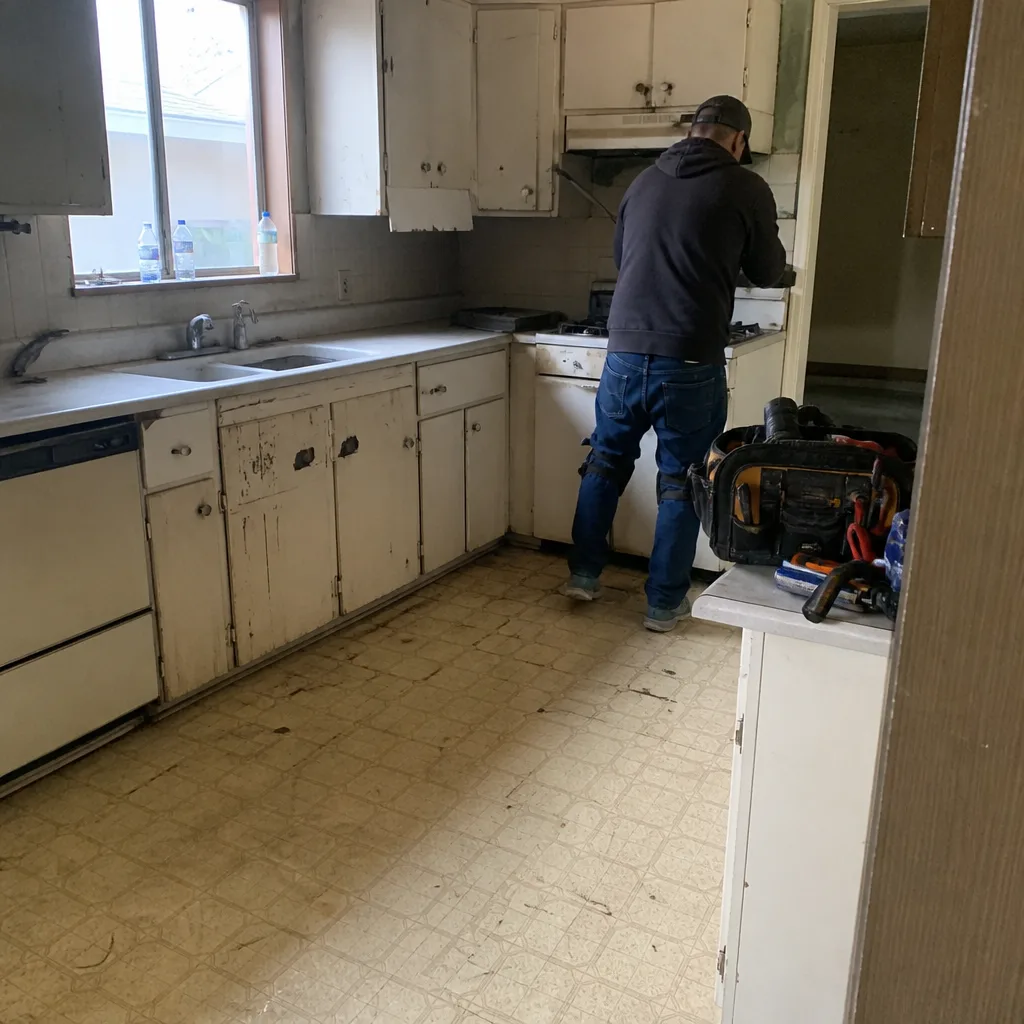 Before
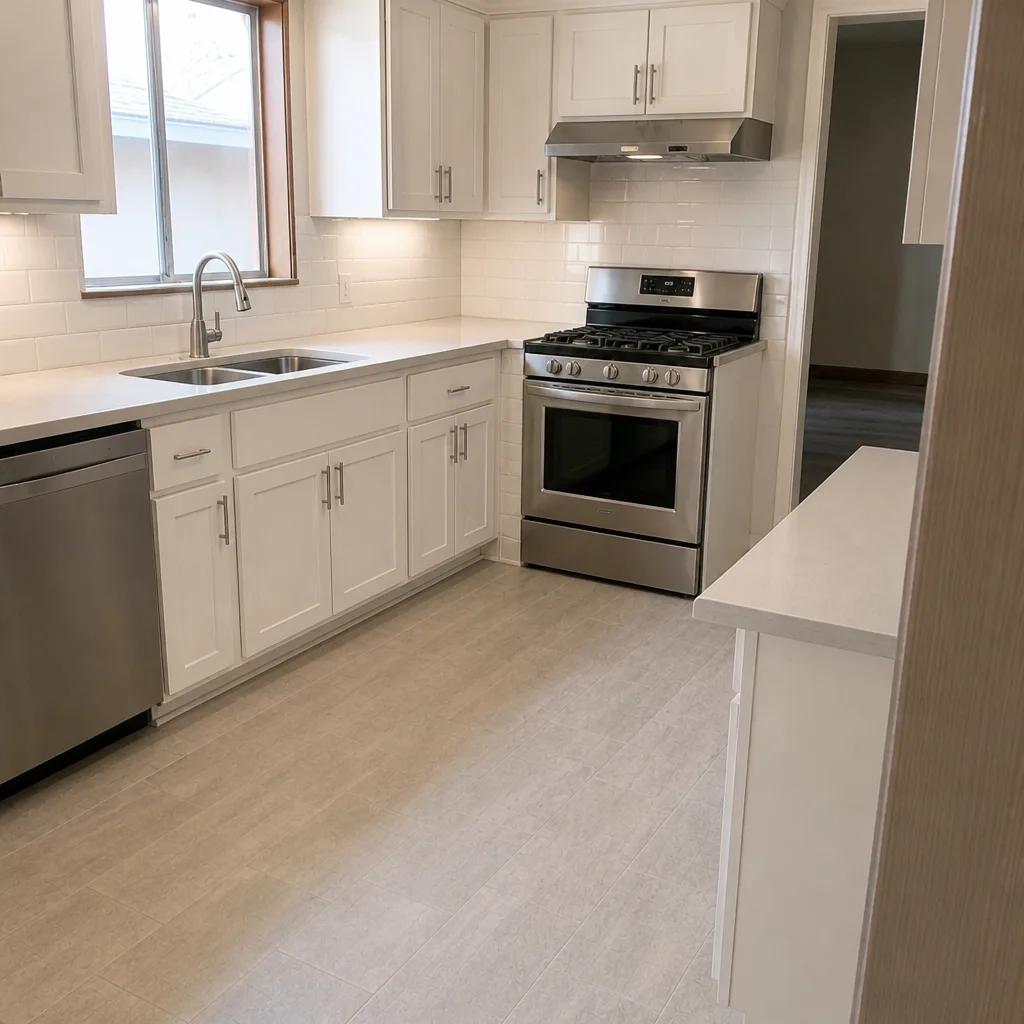 After
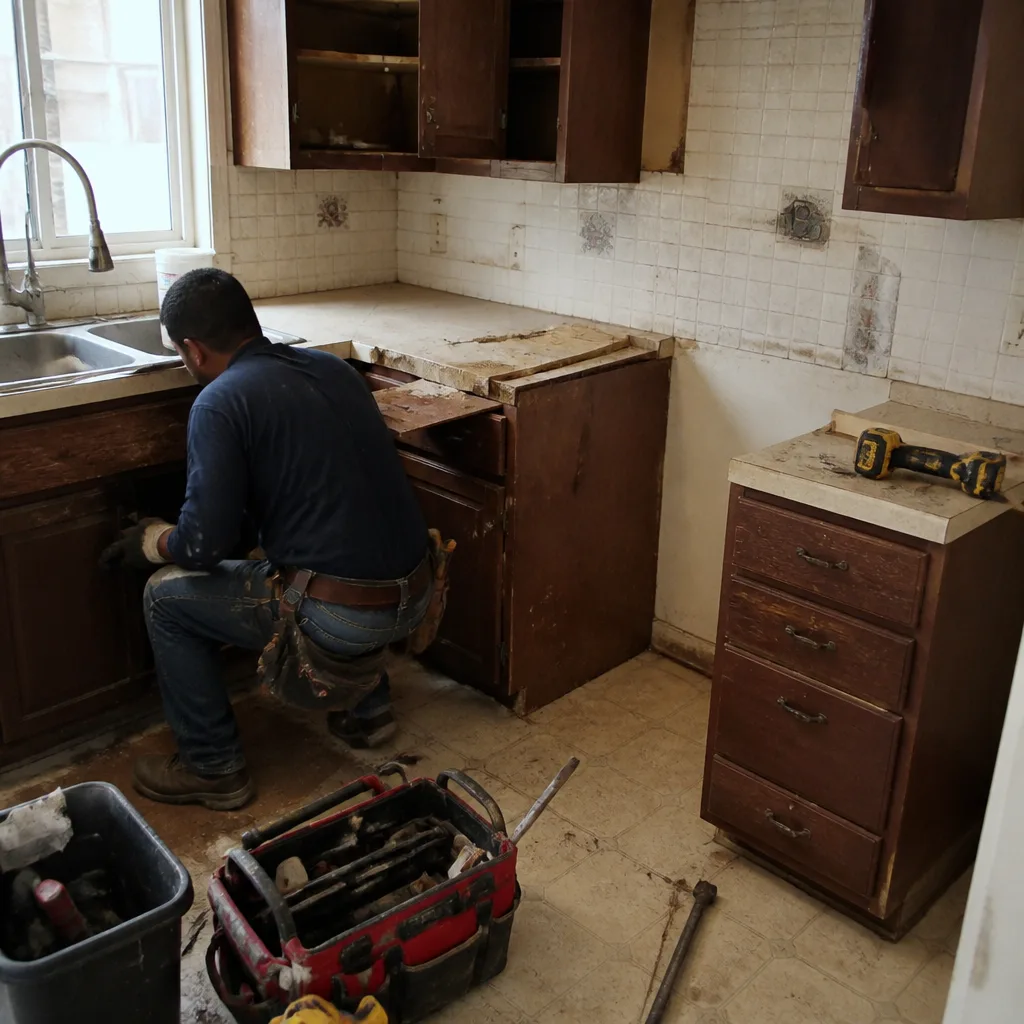 Before
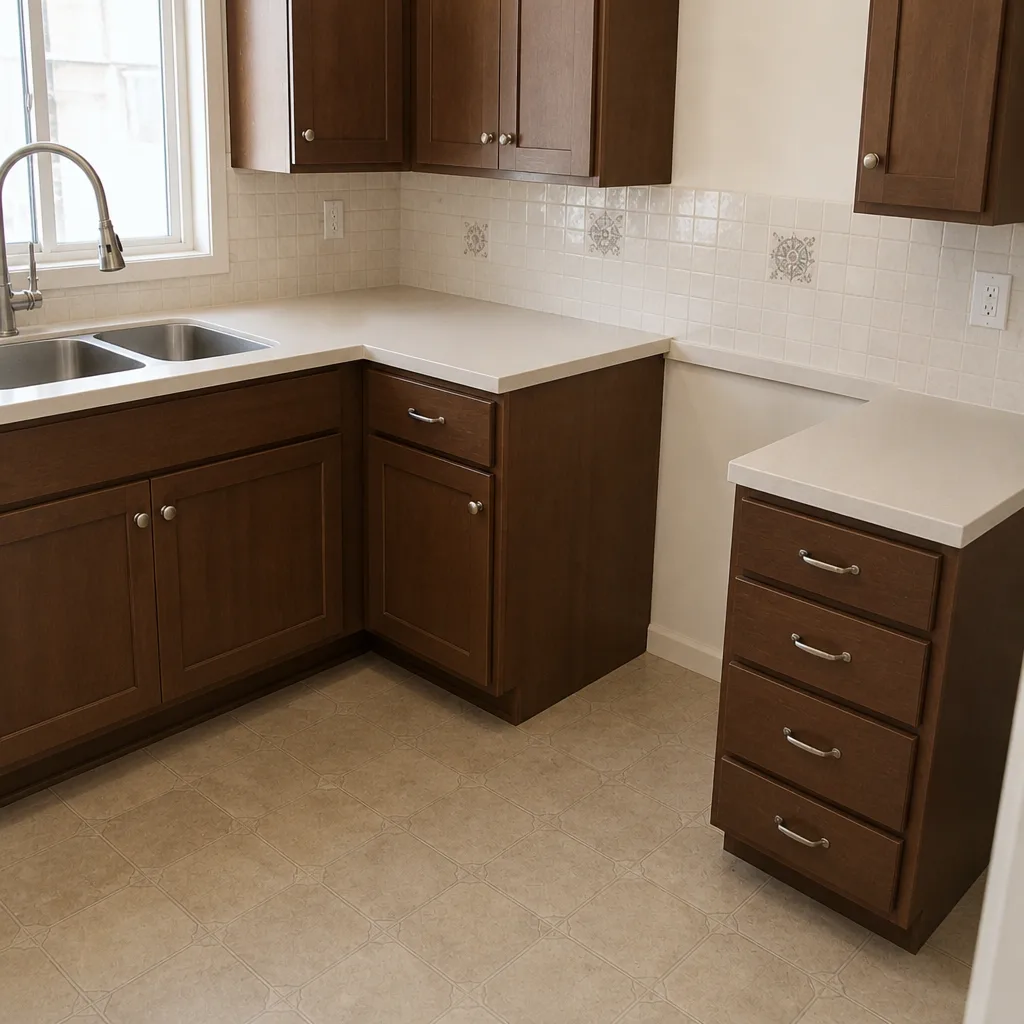 After
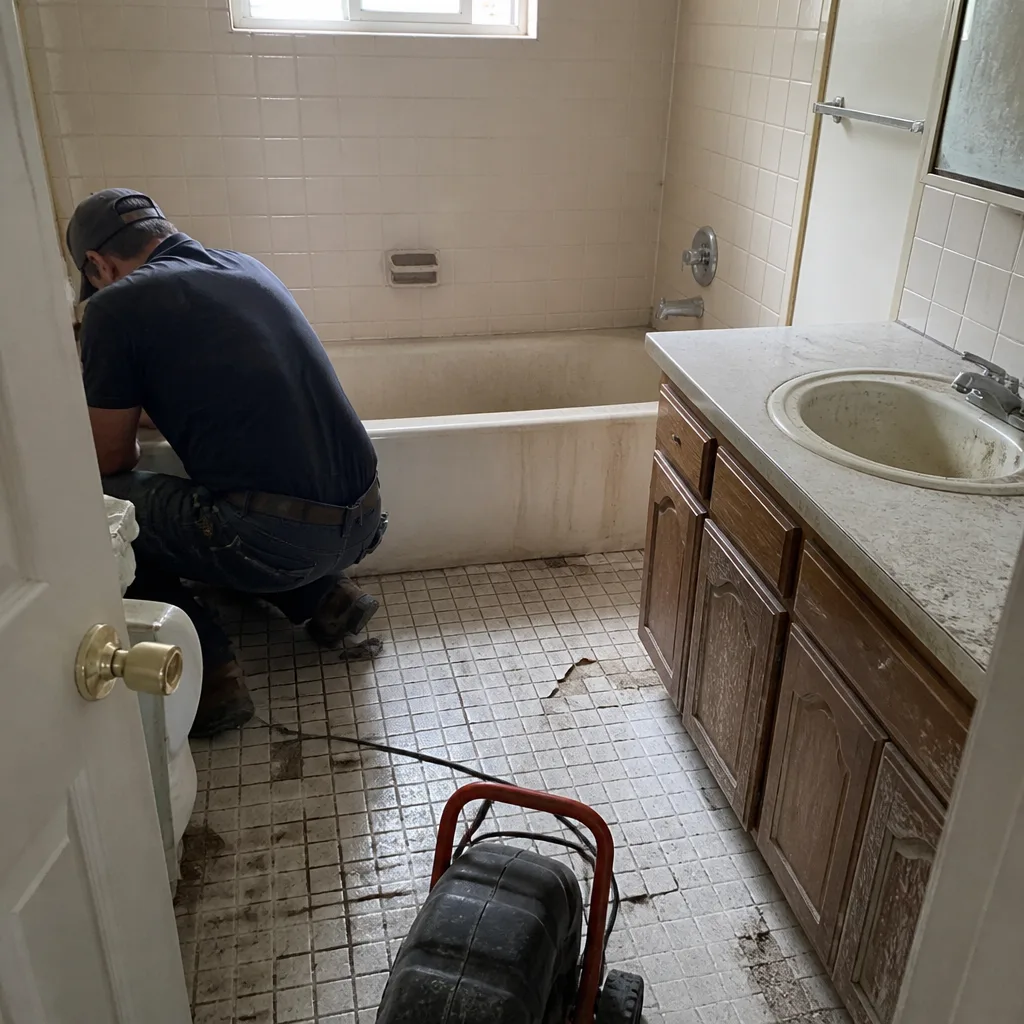 Before
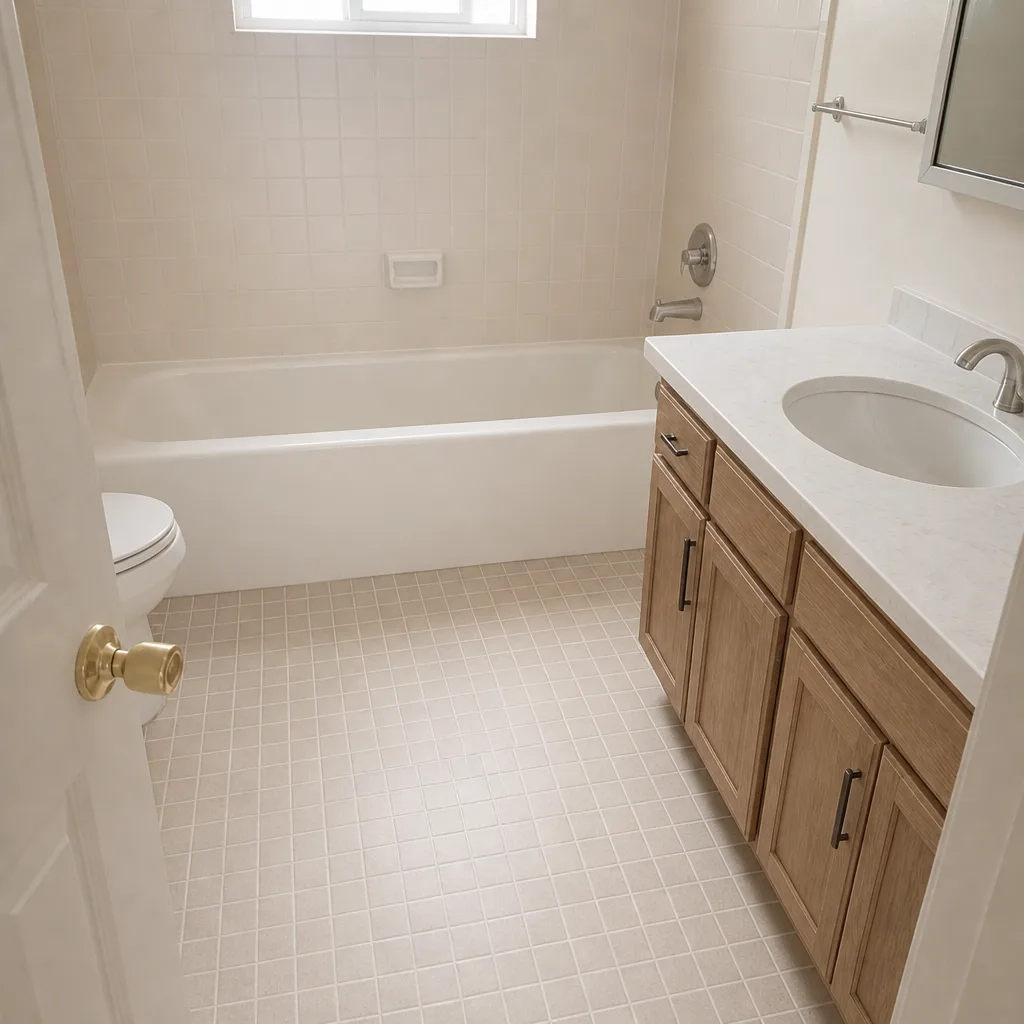 After
When to Call a Professional
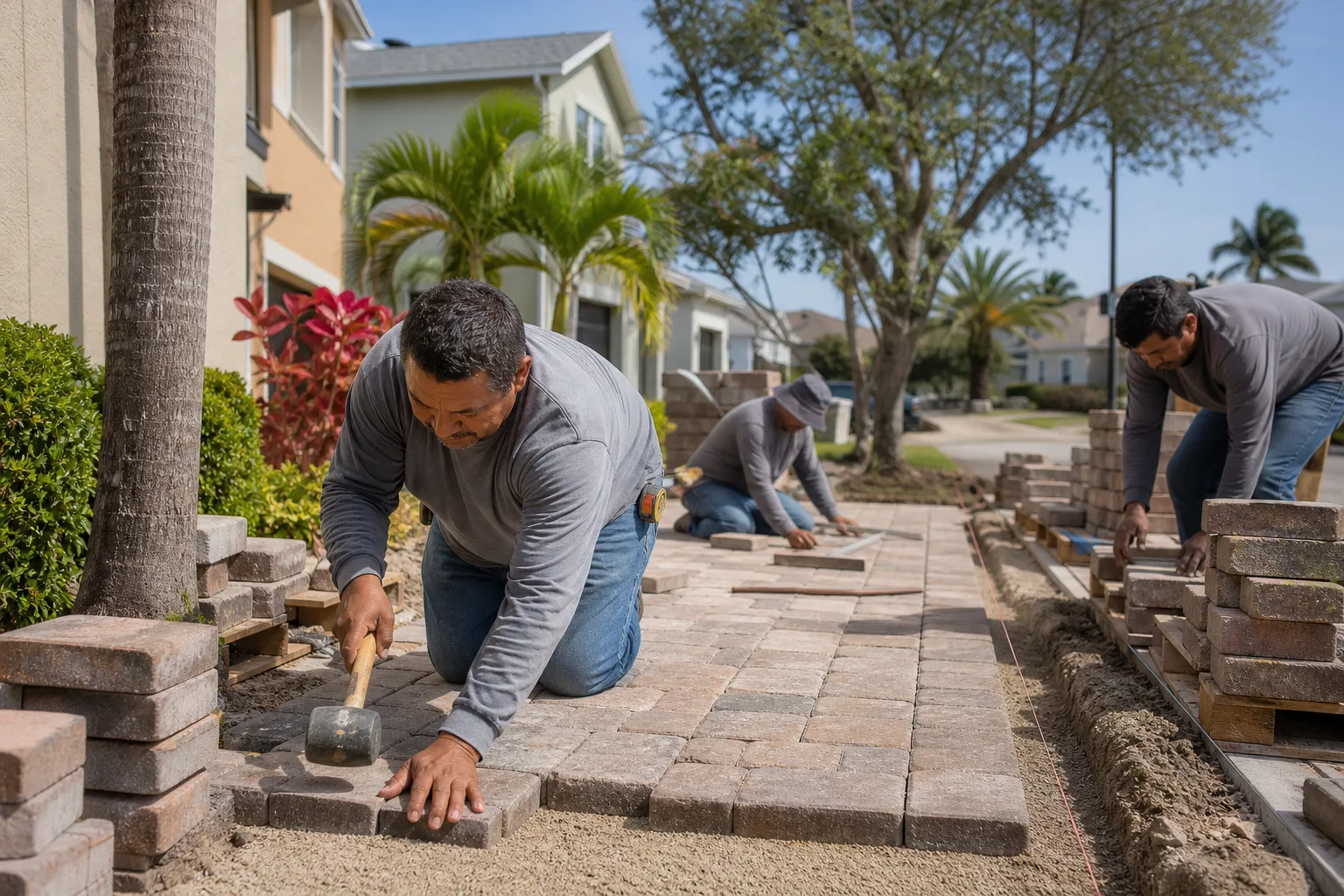
Some home projects reward a homeowner who’s willing to put in the time. A driveway on Vacaville clay is not one of them. The base work, compaction testing, grade verification, and permit process are all things that go wrong silently and surface years later when the pavers start moving. If you’re facing any of the following, get a professional out to look before the design starts:
- An existing driveway that’s cracking, heaving, or settling in the tire tracks or at the apron.
- Water pooling anywhere on the driveway after rain, or draining toward the garage.
- A planned width change or a new driveway in a footprint that goes beyond just replacing existing pavement.
- A noticeably low spot near the garage apron where water sits.
- An older paver driveway that has shifted, has lost its joint sand, or has voids under the surface.
- A sale or refinance coming up that requires the driveway to hold up through inspection.
Groundwork Construction Co. of Vacaville offers free estimates in Vacaville. The estimate includes a written line-item quote that shows base depth, base material, paver selection, drainage scope, permit fees, and the total, with nothing left to a verbal handshake. Call (888) 276-8078 and we’ll get a real answer on your lot instead of a number pulled from a chart.
Frequently Asked Questions
A paver driveway in Vacaville typically runs $14 to $28 per square foot installed, so a 1,000-square-foot driveway lands between about $16,000 and $24,000 in today’s market. The biggest swings come from base conditions, drainage requirements, and paver selection. Call (888) 276-8078 for an exact quote. Estimates are free.
On Vacaville’s expansive clay, a driveway paver base typically needs 8 to 12 inches of compacted aggregate installed in lifts, compared to the 4 to 6 inches you’ll see in generic national guidance. On severe shrink-swell lots, over-excavation with select fill may be needed. The only way to know for sure is a test hole on your specific property before the estimate is finalized.
Replacing an existing driveway in the same footprint often doesn’t require a building permit, but widening, changing drainage, working in the public right-of-way, or exceeding impervious surface limits typically does. Encroachment permits from Public Works are separate when the apron or curb is involved. Confirm the scope with the city before construction starts.
A correctly installed paver driveway on an adequate base in Vacaville should last 25 to 30 years or longer with routine maintenance, including periodic joint sand replenishment and resealing every two to three years. The failure cases we see are almost always base-related, not paver-related, and they surface within three to seven years.
We quote from a test hole and a written scope, so the number on the estimate is the number on the invoice. Upfront pricing, no change orders, is standard on our jobs. If a mid-job discovery genuinely changes the scope, we stop and re-quote in writing before touching anything. Call (888) 276-8078 to schedule a free estimate.
High-density, integrally colored concrete pavers handle Vacaville’s 100°F-plus summers best, and lines from manufacturers like Tremron and Cambridge Pavers are formulated for hot climates. Clay brick holds color indefinitely but needs a low-absorption paver and a sealing regimen. Permeable systems can work with proper underdrain design.
The Bottom Line
Vacaville driveways fail for predictable reasons, and nearly all of them live below the paver surface. The soil is expansive clay that shrinks in summer and swells in winter. The base needs to be deeper than generic guidance calls for, installed in lifts, compacted to test density. The drainage needs to be designed from the garage slab outward with a real discharge point. Permits matter when the scope reaches the right-of-way or the impervious coverage limits. Costs run from roughly $14 to $28 per square foot, with the biggest swings tied to base conditions and drainage work. Get the base and drainage right, and your driveway holds up for decades. Get them wrong, and no paver on earth will save it.
We connect homeowners with independent local professionals across seven service lines, from Groundwork Construction Co. of Vacaville home through everything from kitchen remodels to roofs. We’re proud to serve Vacaville and the surrounding communities, and every project we’re involved with is backed by the 730-Day Done Right Promise: if it’s not done right, we make it right, for two full years after the job closes. Our technicians have up to 12 years of experience, they’re background-checked, and they arrive in uniform. If your driveway is also sitting next to a failing Fence Installation in Vacaville project or you’re planning a wider site improvement like a Home Additions & ADU in Vacaville, we can scope that into the same estimate so the site elevations and drainage are handled together, not piecemeal.
If you’re ready to know what your driveway actually needs on your lot, call our team at (888) 276-8078 for a free estimate. Calls are answered by a live person, 24 hours a day, seven days a week, so you won’t get a voicemail during dinner. We give you a written, line-item quote with base depth, paver selection, drainage scope, permits, and total cost. If the project qualifies, we’ll include the current promotions: $1,000 off projects over $10,000 and 0% financing for 18 months. Upfront pricing, no surprises, from foundation to finish line.
Written by the team at Groundwork Construction Co. of Vacaville.