Last updated November 18, 2026

Free written scope consultation - allowances, timeline, and change-order rules on paper before a single trade is scheduled
The Complete Bathroom Remodeling Guide for Vacaville Homeowners
The most budget-busting bathroom remodel surprises in Vacaville homes built before 1990 aren’t the tile or the fixtures. They’re the galvanized supply lines, cast iron drain stacks, and subfloor damage hiding under the existing floor that no contractor can see until demo day. Tile is the part you plan for. Pipes are the part that plans you. This guide treats the bathroom as what it actually is: a mechanical system wrapped in a finished room. You’ll learn how Vacaville’s permit rules work, how to test your subfloor before you bid, how to spot galvanized pipe before the walls come down, how to size ventilation to California code, and how to structure a contract so a discovery behind the wall doesn’t blow up the budget. Vacaville has a large share of mid-century housing stock, and every section here is written around that reality.
Quick Answer
A bathroom remodel in Vacaville generally runs $14,000 to $32,000 for a mid-range full renovation and $45,000 and up for a high-end primary bath, with the biggest cost swings coming from what’s found behind the walls during demo. Any project that moves a drain, relocates a plumbing fixture, or adds electrical near water requires a permit through the City of Vacaville, and older homes with galvanized supply lines or cast iron drain stacks often need hidden infrastructure replaced before the finish work can begin. Budget a 15 to 20 percent contingency line and you’ll survive demo day without renegotiating your whole project.
Styles & brands we work with
- Kitchen remodeling
- Bathroom remodeling
- Home additions & ADU
- Roofing
- Windows & doors
- Driveway & pavers
- Fence
Table of Contents
- What does a bathroom remodel actually cost in Vacaville?
- When does a Vacaville bathroom remodel need a permit?
- The water supply reality in older Vacaville neighborhoods
- How to test your subfloor before you sign a contract
- Ventilation: the code requirement most remodels get wrong
- How to structure a bathroom remodel contract with a discovery contingency
- Choosing fixtures and finishes that fit Vacaville homes
- Common mistakes to avoid
What does a bathroom remodel actually cost in Vacaville?
A full bathroom remodel in Vacaville typically costs between $14,000 and $32,000 for a mid-range renovation of a hall bath or primary bath under 80 square feet. High-end primary suites with expanded footprints, custom tile work, and upgraded plumbing land between $45,000 and $80,000. A cosmetic refresh that keeps the layout and reuses the plumbing locations can come in under $10,000, but only when the walls stay closed.
Here’s the line-item range we see most often on Vacaville projects:
- Demo and haul-away: $1,200 to $2,800
- Plumbing rough-in (fixture relocation or replacement): $2,500 to $6,500
- Electrical (GFCI outlets, lighting, exhaust fan): $1,200 to $3,000
- Permit fees through the City of Vacaville: $400 to $1,200 based on valuation
- Subfloor repair and tile backer installation: $1,800 to $4,500
- Tub, shower, or shower pan and surround: $2,000 to $7,000
- Tile (floor and walls, installed): $3,500 to $9,000
- Vanity, countertop, sink, and faucet: $1,500 to $5,500
- Toilet and fixtures: $600 to $2,200
- Paint, trim, and finish carpentry: $800 to $2,000
The ranges are wide because Vacaville homes aren’t one housing stock. A 1960s rancher off Alamo Drive and a newer build out near Vaca Valley have different bones, different pipe materials, and different subfloor construction. The line that gets skipped in most budgets isn’t a line item at all: it’s the contingency for what demo uncovers. Set that aside first.
Upfront pricing means the number you see is the number you pay, with the contingency tracked openly instead of folded into a vague allowance. If you want to see how we structure this across trades, our Groundwork Construction Co. of Vacaville home page lays out the full-scope approach. Call (888) 276-8078 for a free estimate before you start lining up bids.
When does a Vacaville bathroom remodel need a permit?
Any bathroom remodel that moves a plumbing fixture, relocates a drain, adds a circuit, adds an outlet near water, or changes the exhaust fan requires a building permit through the City of Vacaville’s Building Division. Cosmetic-only work – repainting, re-tiling over an existing sound surface, swapping a faucet or a toilet in the original location – generally does not. That’s the short version, and the licensed contractor pulling your permit will be the one who confirms the specifics of your project against the current code cycle.
Here’s how to think about permit triggers:
- Plumbing relocation or replacement of drain/vent piping: Permit required. Any change to the drain, waste, and vent system gets inspected.
- Adding or moving electrical outlets, switches, or lighting: Permit required. All bathroom receptacles must be GFCI-protected and every new circuit gets inspected.
- New or changed exhaust fan: Permit typically required as part of the electrical scope, and the vent must terminate outdoors per California code.
- Wall changes that affect structure, like removing a wall or enlarging a doorway: Permit and sometimes a structural review required.
- Cosmetic only, fixtures stay in place: Usually unpermitted-safe. Repaint, re-tile, reface a vanity, swap a faucet.
One thing homeowners consistently underestimate: an unpermitted remodel can surface at resale. Vacaville’s older neighborhoods are full of homes where a bathroom was expanded without a permit decades ago, and it becomes a title and insurance conversation during a sale. If you’re buying a pre-1990 Vacaville home, ask whether the bathroom was ever permitted. If you’re remodeling one, pull the permit and keep the inspection card. It’s cheap protection and it’s the difference between a remodel and a liability.
The water supply reality in older Vacaville neighborhoods
Galvanized steel supply lines are the single most common hidden problem in Vacaville homes built before roughly 1980. The pipe looks like silver-gray iron, often threaded at joints, and it rusts from the inside out. Pressure drops, water turns brown after a shutoff, and eventually a pinhole leak floods a wall cavity. Replacing tile over a wall that still holds galvanized pipe is a time bomb – the wall fails from the inside while the finish looks brand new.
You can identify galvanized pipe before demo, from outside the wall, in a few steps:
- Look at the main shutoff and the exposed runs under the sinks. If they’re silver-gray with threaded fittings and no copper or PEX visible, you likely have galvanized.
- Check the water color test. Shut off the main, open a faucet, and let it run for 30 seconds. Brown or rusty first water is a strong signal of internal corrosion.
- Test pressure at the furthest fixture. Low flow at the shower or an upstairs sink, especially when another fixture runs, points to a restricted galvanized supply.
- Look for repair couplings. Several mismatched patches on the same run usually mean the system is failing in place.
Cast iron drain stacks are the companion problem. They rust from the inside, they crack at the hubs, and they eventually leak into the subfloor and the ceiling below. If your Vacaville home was built before 1975 and you’re opening walls anyway, this is the moment to replace them with ABS. Enclosing old cast iron without replacement means you’ll be doing this again in ten years, and next time with a finished bathroom to remove first.
If you’re planning a larger project alongside this one – a primary suite addition, or a bathroom added to an ADU – see our Home Additions & ADU in Vacaville page, because the same plumbing-age questions apply before ground is broken.
How to test your subfloor before you sign a contract
Tile needs a stiff, flat, sound substrate. Ceramic and porcelain will crack over a subfloor that flexes, no matter how good the tile setter is. In older Vacaville homes, subfloor construction varies widely – some floors have 3/4-inch plywood with a mud bed over it, some have 5/8-inch particleboard under carpet, and some have water damage from a decades-old shower pan that no one ever addressed. Before you sign with any contractor, do a basic deflection and moisture check.
Here’s the test any homeowner can do before contractor bids go out:
- Bounce test. Stand in the middle of the bathroom floor and shift your weight firmly. Any noticeable give or squeak underfoot is a red flag. A properly supported subfloor shouldn’t flex.
- Visual peek at the toilet flange. Pull the toilet (or ask a contractor to) and look at the subfloor underneath. Dark, soft, or crumbling edges mean water has been leaking there. This is common around older shower pans.
- Moisture check. Press a paper towel against the exposed subfloor near the shower and tub after a normal shower. Any dampness means ongoing leak or vapor issue.
- Floor thickness check. Measure the plywood thickness at the toilet flange or a floor register. Under 5/8 inch, ask your contractor what backer system they plan to use. Over laminate or particleboard, plan on replacing it.
The good news: a backer board or mud bed system can solve a lot of subfloor weakness, but it costs money, and it changes your floor height by a quarter to three-quarter inch, which means the door needs trimming and the transition to the hall floor changes. That’s a small line item to add up front. It’s a big surprise when it appears mid-project after the tile is already set.
Ventilation: the code requirement most remodels get wrong
Bathroom exhaust fans have to be sized to the room, and most remodels that keep the old fan are undersized for the new layout. California code ties bathroom ventilation to the room’s volume and to the type of shower. A fan that was adequate in a 5-by-8 hall bath is often wrong for a 9-by-11 replaced primary bath with an expanded glass shower. Get it wrong and you’ll paint over mold within a year.
Here’s the rule of thumb we work with, and the details your contractor will confirm against the current code cycle:
- Fan capacity is measured in CFM (cubic feet per minute). The general rule is 1 CFM per square foot of floor area for rooms under 100 square feet, and higher for larger baths.
- Vent termination matters as much as the fan. The vent must run to the outdoors, not into the attic or under the house. Venting into the attic is where the moisture and mold come from.
- Run time is part of the system. A timer switch or a humidity-sensing fan runs long enough to clear the moisture instead of being flicked off the moment the mirror clears.
- Duct run matters. Long, sagging, or undersized duct kills fan performance. A strong fan with a cramped run isn’t doing its job.
What happens if you get it wrong is not subtle. Drywall softens at the seams, paint bubbles near the ceiling, and mold shows up behind the shower surround within a few seasons. Fixing it later means opening the ceiling or the closest wall, which is exactly the work you just finished paying for. The cost to do it right during the remodel is typically a few hundred dollars. The cost to do it after is a repair project.
How to structure a bathroom remodel contract with a discovery contingency
Bathroom remodels are the most discovery-prone room in the house. You can’t see behind the walls until demo. So the smartest thing you can do before you sign is insist that the contract has a contingency line item for discovery. A 15 to 20 percent contingency on the base scope is standard for Vacaville pre-1990 homes. That money sits in reserve and is only spent with written approval when demo reveals something hidden.
Here’s how to structure the contract so it protects both sides:
- Get a written, line-item quote. Each trade should be listed with its own scope, not bundled into a single project price.
- Require a written contingency line item. 15 to 20 percent on the base scope, held unspent unless a discovery requires it.
- Define “discovery” in writing. Subfloor rot, failing pipe, missing framing, or code violations found after demo. Anything beyond that goes to a change order.
- Insist on written approval before any contingency money is spent. No surprise invoices after the walls close up.
- Ask where the permit fee sits. A contractor who quotes the base price without naming the permit is quoting a lower number than the one you’ll actually pay.
- Confirm the warranty in writing before you sign. Look for the exact coverage period and what triggers it. Our work is covered by the 730-Day Done Right Promise, which is a written commitment, not a verbal one.
Upfront pricing means the number you see is the number you pay, within the agreed scope, with the contingency tracked separately and openly. If a bid comes back at a round number that’s meaningfully lower than two other bids on the same scope, the discovery line is almost always where the gap is hiding. The job will still cost what it costs. The question is whether you find out up front or at the end of week three.
Choosing fixtures and finishes that fit Vacaville homes
Vacaville’s dry summers and moderate winters are easy on finishes compared to the coast, but the local housing style matters more than the climate. The majority of mid-century and 1970s homes here were built with modestly sized baths and standard 5-by-8 footprints. That means material selection should be driven by fit and by what actually holds up in a smaller room, not just what’s on the showroom wall.
What we generally recommend for Vacaville bathrooms:
- Vanity cabinetry: KraftMaid and Wellborn both make semi-custom lines that fit non-standard wall lengths, which is common in older Vacaville homes where the bath was squeezed between bedrooms.
- Tile: porcelain over glass for floors. Glass looks beautiful but shows water spots badly, and Vacaville’s mineral content in the water shows it. Porcelain is more forgiving and costs less over ten years.
- Shower surround: large-format panels or large tiles mean fewer grout lines, which matters more in a small room where the shower is the visual anchor.
- Cabinet and trim material: moisture-resistant substrates at minimum. In a bathroom, the wrong material at the cabinet base shows up as swelling within two seasons.
- Fixture finish: brushed nickel and matte black hold up better than polished chrome against Vacaville’s harder water.
Material selection is where a curated portfolio matters. We work with a range of vetted brand partners across trades, and we’d rather help you pick the right fit the first time than replace an undersized vanity six months after install. That includes James Hardie exterior products if the remodel turns into an exterior scope as well.
If the bathroom project sits next to other work you’re planning, our Fence Installation in Vacaville and Driveway & Pavers in Vacaville pages cover the exterior trades, because we often sequence those alongside an interior renovation so the site stays coordinated from foundation to finish line.
Common Mistakes to Avoid
- Enclosing galvanized pipe behind new tile. If the walls are open and the pipe is gray and threaded, replace it. Re-tiling over failing supply lines is the most expensive shortcut in the book.
- Skipping the permit to save a few hundred dollars. Vacaville’s permit fees are small compared to what an unpermitted remodel costs at resale, and every inspection protects the next owner as much as you.
- Keeping the old exhaust fan in a bigger bathroom. A fan sized for a 5-by-8 hall bath won’t clear a 9-by-11 room with a glass shower, and the drywall will show it within a season.
- Budgeting for tile and fixtures but not for what’s behind them. Demo-day discoveries are the rule in Vacaville homes built before 1990, not the exception. A contract with no contingency line item is a change order waiting to happen.
- Choosing a stunning glass tile floor in a high-traffic bath. Beautiful in a photo, miserable to clean with Vacaville’s mineral content in the water. Porcelain wins on livability.
- Hiring on price alone from a bid that leaves off the permit and the disposal. The lowest bid is often the least complete one, and the missing line items reappear at the end of the project.
- Skipping the subfloor test before signing. A five-minute bounce and moisture check before bidding saves you a mid-project surprise on the backer board and door trim.
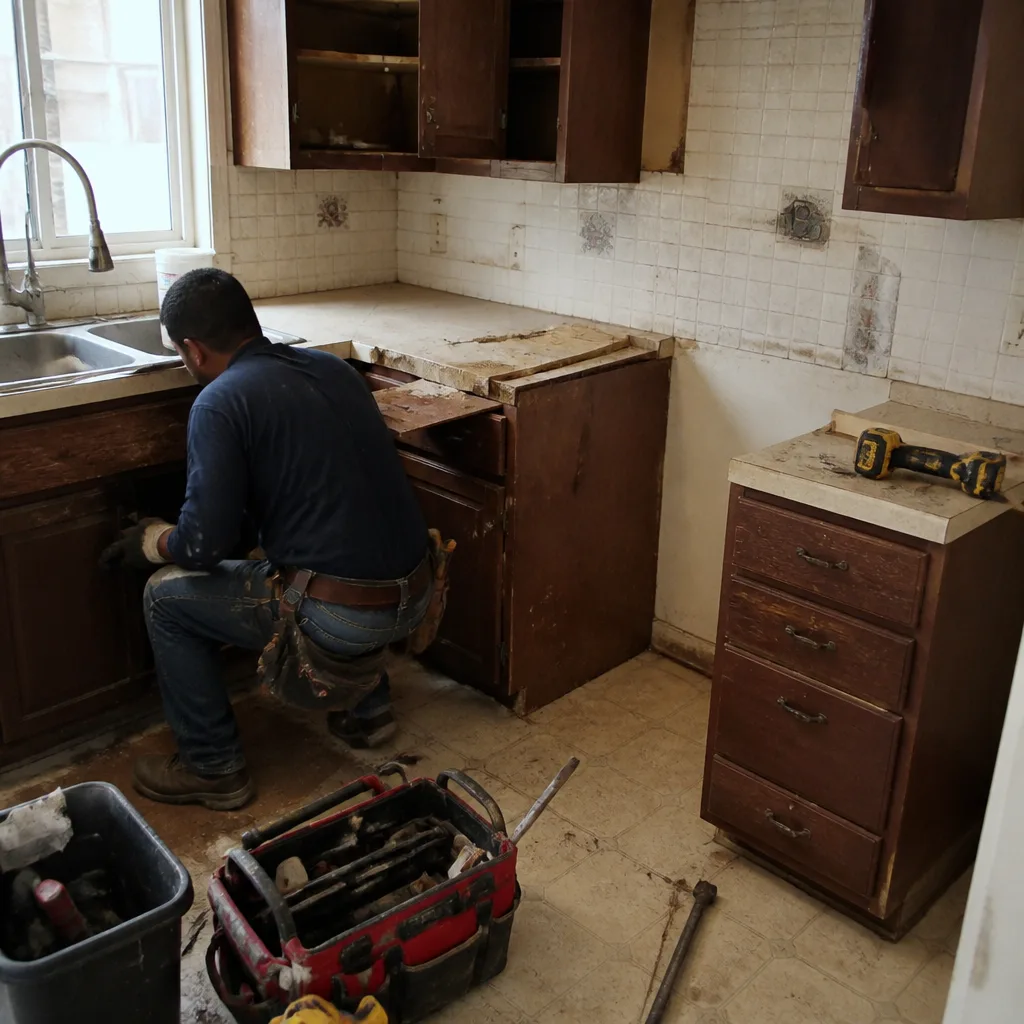
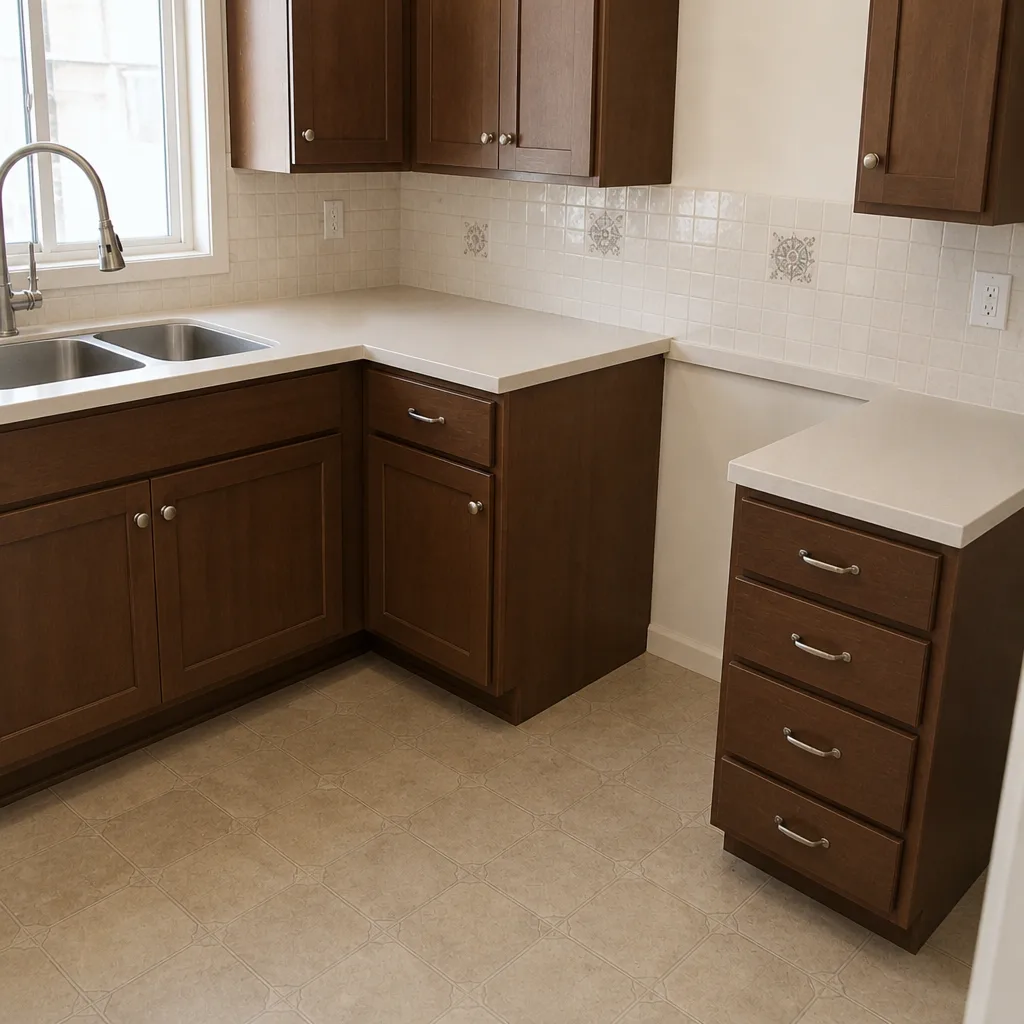
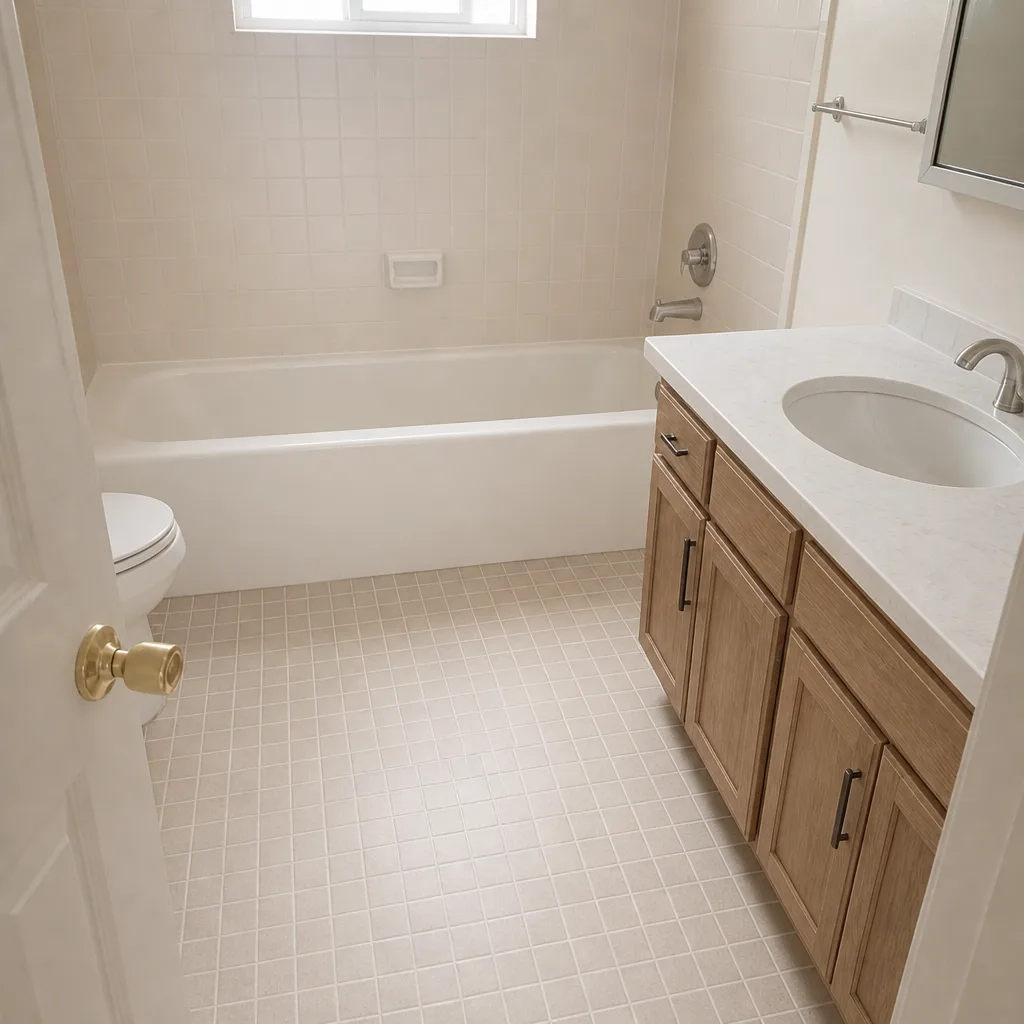
See the difference
 Before
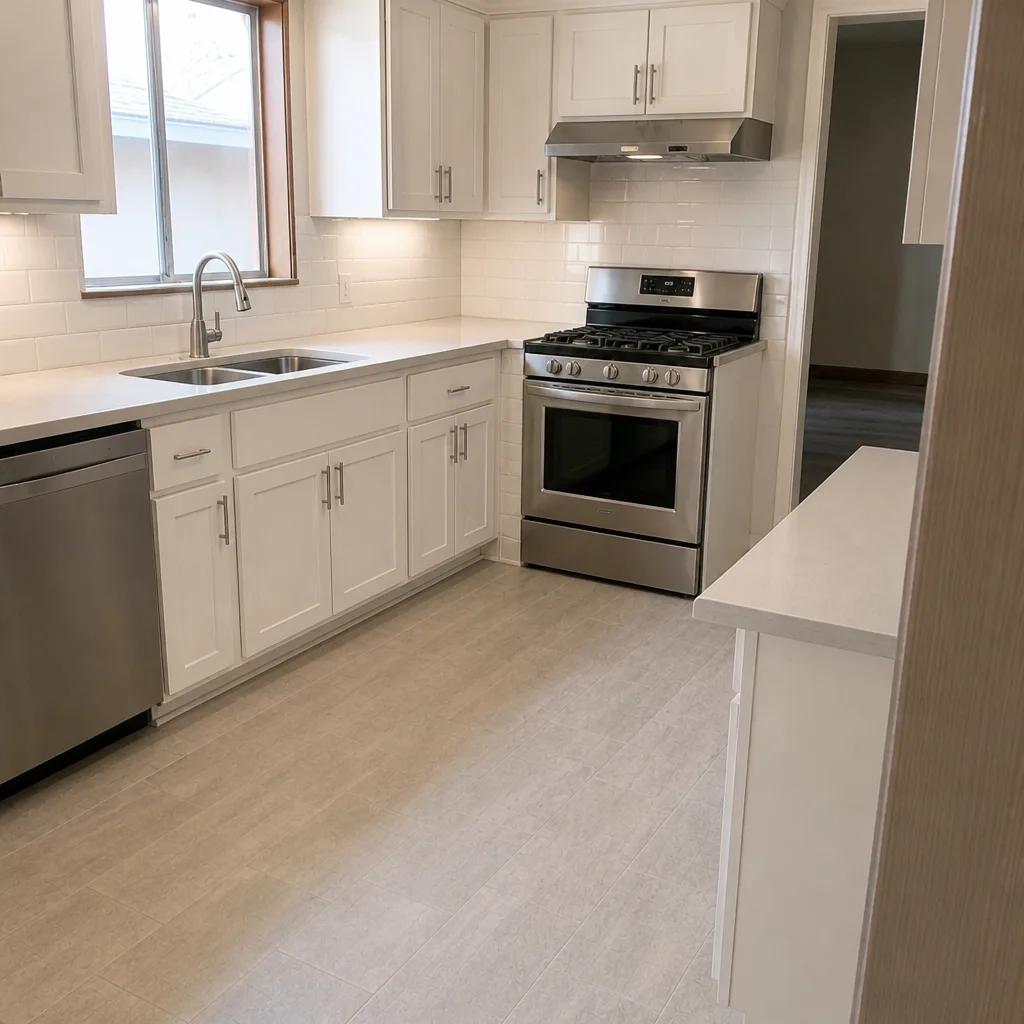 After
 Before
 After
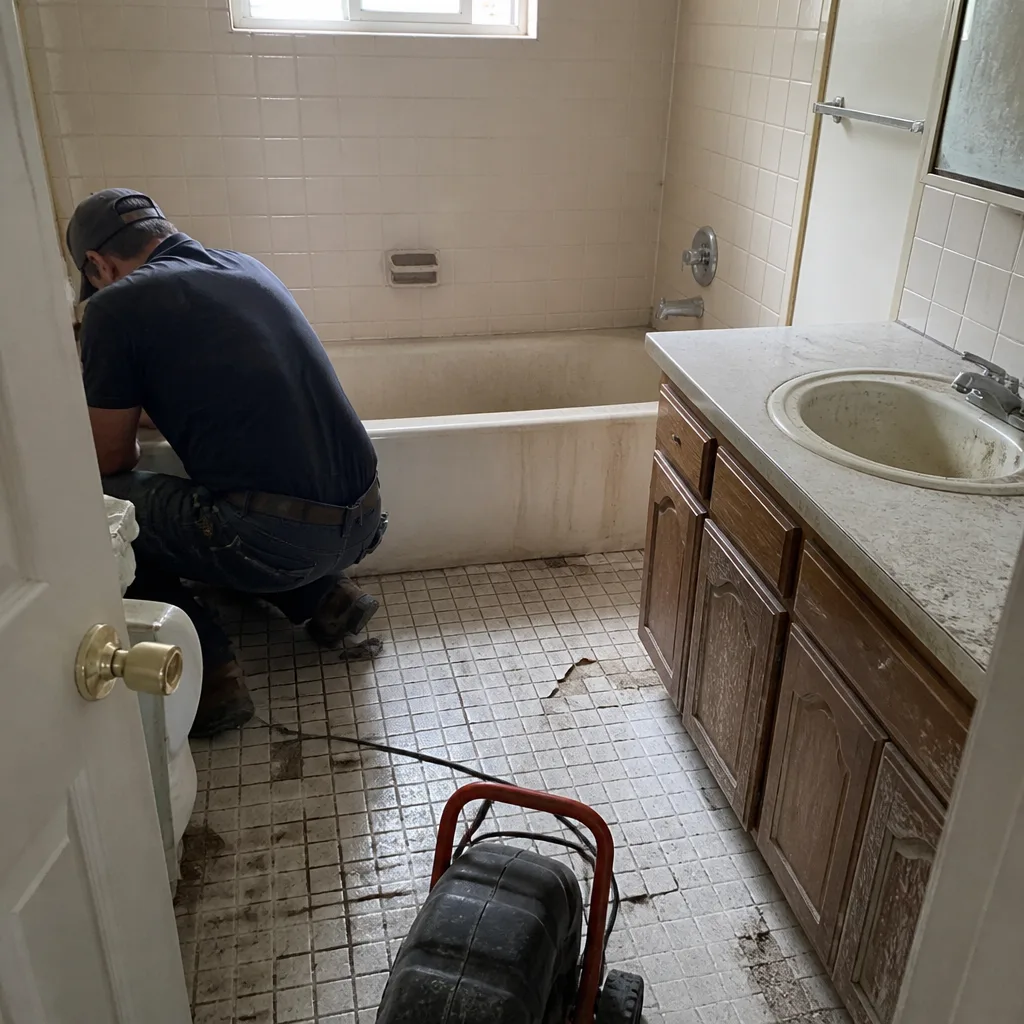 Before
 After
When to Call a Professional
Call a professional before you start demo if any of the following applies: your Vacaville home was built before 1980 and you don’t know the pipe material, the toilet flange shows water staining or soft subfloor, the existing exhaust fan is more than a few years old and undersized for the room, your plan moves any fixture from its current location, or your project adds electrical near water. High-tension plumbing work, gas connections if you’re moving a water heater closet, and any electrical in a wet zone should never be a homeowner DIY job. Those are licensed-scope items for a reason: the failure mode is water damage or fire, and it happens long after the crew leaves. Groundwork Construction Co. of Vacaville offers free estimates in Vacaville – call (888) 276-8078. Calls are answered by a live person, 24/7, and every estimate is written and line-item.
Frequently Asked Questions
A full bathroom remodel in Vacaville typically runs $14,000 to $32,000 for a mid-range hall or primary bath, and $45,000 to $80,000 for a high-end primary suite with an expanded footprint. The biggest single variable is what demo uncovers behind the walls: galvanized pipe, cast iron drain stack, or subfloor damage can add $4,000 to $12,000 to a project that looked cosmetic on paper. Call (888) 276-8078 for an exact quote – estimates are free and line-item.
Yes, if the project moves or replaces any plumbing fixture, adds electrical outlets or lighting near water, or installs a new exhaust fan. Cosmetic work that leaves fixtures in place – repainting, re-tiling over a sound surface, or swapping a faucet in the original location – generally does not. The City of Vacaville’s Building Division issues the permit and inspects the work, and a licensed contractor will confirm what your specific project triggers. Call (888) 276-8078 to discuss your scope before a permit is filed.
Look at the exposed pipe under sinks and at the main shutoff: silver-gray, threaded, no copper or PEX in sight means you likely have galvanized. Confirm with a water color test – shut off the main, let a faucet run, and check for brown or rusty first water – plus a pressure check at the furthest fixture. If your Vacaville home was built before 1980 and you’re opening the walls anyway, this is the moment to replace it. Call (888) 276-8078 and we’ll look with you before the walls come down.
Not without your written approval. Our contracts are written with a separate 15 to 20 percent contingency line item for discovery items, so demo-day surprises are handled from a pre-agreed reserve rather than renegotiated on the fly. Nothing over that contingency is spent without written sign-off. Upfront pricing means the number you see is the number you pay within the agreed scope. Call (888) 276-8078 for a written estimate with the contingency line shown openly.
A mid-range full bathroom remodel typically takes four to seven weeks, with the timeline driven by permit turnaround at the City of Vacaville and by the scope of discovery work found during demo. A cosmetic refresh can be measured in days, while a primary suite with expanded footprint and plumbing relocation runs closer to ten to twelve weeks. Call (888) 276-8078 for a schedule estimate on your specific project.
Workmanship on the entire project is covered for 730 days – if it’s not done right, we make it right. That’s two full years on the finished bathroom, which is considerably longer than the industry standard workmanship warranty. The commitment is written into the contract, not offered as a verbal promise. Call (888) 276-8078 and we’ll walk you through the exact language before you sign anything.
The Bottom Line
Vacaville bathroom remodels are mechanical projects wearing a decorative finish. The tile and the fixtures are the visible part, and they matter – but the budget lives in the pipes, the subfloor, the ventilation, and the permit. Test the subfloor before you bid. Identify your pipe material before demo. Size the fan to the new room, not the old one. Structure a contract with a written 15 to 20 percent contingency so discovery items don’t become renegotiation items. Pull the permit and keep the inspection card. Do those five things and the finish work gets to be the fun part, which is what it’s supposed to be. Groundwork Construction Co. of Vacaville is a full-scope home construction partner for homeowners who want the whole story in writing before anyone swings a hammer. Call (888) 276-8078 for a free estimate and design consult.
Written by the team at Groundwork Construction Co. of Vacaville.