Last updated November 18, 2026



Free written scope consultation - allowances, timeline, and change-order rules on paper before a single trade is scheduled
DIY vs Professional Bathroom Remodeling: What’s Safe to Do Yourself
The most expensive bathroom repairs we see in Vacaville don’t come from bad contractors. They come from capable homeowners who crossed one invisible line: a shower pan liner set wrong, a vent rerouted without a permit, a waterproofing layer skimped on a Saturday afternoon project. These weren’t people who lacked skill. They were people who did almost everything right and lost thousands on the one thing they couldn’t see until the subfloor rotted two winters later.
This guide draws the actual line. You’ll learn which bathroom tasks are genuinely safe to handle yourself and which ones cost more than a pro would have charged once a single mistake gets discovered. We’ll cover the Solano County permit triggers that turn a weekend project into a code enforcement problem, how mixing DIY phases with professional phases affects your warranty, and the honest truth about moisture barriers. Whether your bathroom is in Browns Valley or a 1960s ranch near downtown Vacaville, the rules are the same.
Quick Answer
Painting, swapping a faucet or vanity top, regrouting tile, replacing a toilet or light fixture, and installing accessories are safe DIY territory with zero risk to your home’s value or permits. Wet-area work – shower pan liners, waterproofing membranes, drain and vent relocation, electrical rough-in, and anything that touches the plumbing supply or gas lines – is where one mistake costs more than the pro would have charged, and where a permit is often required. Tile work and vanity swaps are low-stakes. Shower pans and vent relocation are not. That’s the line.
Styles & brands we work with
- Kitchen remodeling
- Bathroom remodeling
- Home additions & ADU
- Roofing
- Windows & doors
- Driveway & pavers
- Fence
Table of Contents
- The Solano County Permit Triggers Nobody Warns You About
- Tasks That Are Genuinely Safe to Do Yourself
- The Danger Zone: Where One Mistake Costs More Than the Pro
- The Moisture Barrier: The Invisible Step That Decides Everything
- Why Tile Work and Vanity Swaps Are Low-Stakes but Shower Pans Are Not
- Mixing DIY Phases With Professional Phases: How It Affects Liability
- Will DIY Work Void a Future Contractor’s Warranty?
- How to Plan the Professional Phase of a Hybrid Remodel
The Solano County Permit Triggers Nobody Warns You About
Here’s the part most DIY guides skip: in Vacaville and the surrounding Solano County unincorporated areas, a “simple” bathroom project crosses into permit territory faster than you’d expect. Understanding those triggers before you swing a hammer saves you from a code enforcement visit, a stop-work order, or a disclosure headache when you sell.
Under the California Building Code as adopted locally, a permit is generally required when you:
- Relocate or add plumbing fixtures. Moving a toilet, sink, or shower to a new location is a plumbing permit event. Replacing a fixture in the same spot usually isn’t.
- Move, cut, or notch structural framing. Widening a doorway into a load-bearing wall or cutting a header to fit a bigger vanity triggers plan review.
- Add or relocate electrical circuits, outlets, or exhaust fans. A new GFCI circuit for a heated towel bar or a relocated ceiling fan is an electrical permit.
- Install a new exhaust fan or duct that penetrates the building envelope. Venting through the roof or sidewall needs to be done to code, and inspectors want to see it.
- Convert a tub to a walk-in shower with a new drain location. A pan replacement in the same footprint is often a repair. A reconfigured layout is a remodel.
- Add a steam shower, heated floor, or other specialty system. Each one adds its own permit and inspection.
In Vacaville’s older neighborhoods near downtown and the older parts of the Nut Tree corridor, decades-old plumbing is common. What looks like a simple valve replacement turns into a permit once the existing galvanized supply lines crack during the swap. If you’re ever unsure, a five-minute call to the Vacaville Building Division settles it. A bathroom remodel in Vacaville that pulls the right permits also holds its value far better at resale, because buyers and appraisers can verify the work.
Tasks That Are Genuinely Safe to Do Yourself
We’re not here to talk you out of every project. Some bathroom work is low-stakes, reversible, and genuinely cost-effective to do yourself. Here’s the short list of where the risk of a “single mistake costs more than the pro” scenario is essentially zero.
- Painting. Walls, ceilings, trim, even cabinet boxes. The only real risk is drips you clean up with a rag. Use a mold-resistant paint in bathrooms to help manage Vacaville’s dry climate cycling and the seasonal humidity your shower creates.
- Replacing a faucet. Shut off the angle stops under the sink, use thread tape, and you’re done inside an hour. No permit needed when the supply lines stay put.
- Swapping a vanity top or cabinet. As long as the drain and supply hookups land in the same place, this is a swap, not a re-plumb. Measure twice, cut once, and don’t cut framing.
- Replacing a toilet with the same rough-in. Pull, set a new wax ring, drop in the new unit. A 10-inch rough-in to a 10-inch rough-in is a wrench job.
- Replacing a light fixture. Kill the breaker, verify it’s dead with a tester, and swap the fixture. This is genuinely safe for most homeowners as long as you don’t add a new circuit.
- Regrouting tile. Grout does fail, and regrouting keeps water out. This saves real money when you catch it before it cracks.
- Installing accessories. Towel bars, mirrors, shower heads with no concealed plumbing, shelving, and cabinet hardware.
- Replacing a shower head, sink faucet, or tub spout. Shut-off valve at the fixture, thread tape, done.
Every item on this list is reversible, doesn’t touch the building envelope, and doesn’t trigger an inspection. If you’re hiring us for the harder half of a Vacaville bathroom, we’ll happily work around the DIY portions you want to handle. The Groundwork Construction Co. of Vacaville home page explains how we scope projects that way.
The Danger Zone: Where One Mistake Costs More Than the Pro
Here’s the honest list. Every item below is a genuine 911 call waiting to happen, or a five-figure water damage bill waiting to reveal itself, or a warranty-voiding event that surfaces two contractors from now. Save yourself the stress and the money.
- Shower pan liner installation. The liner has to slope properly to the drain, be sealed at the curb, and be protected from the weep holes. A single pinhole, a slope that runs the wrong way, or a nail through the liner means water sits in the subfloor for years. The pro cost is $800 to $2,400 including the pan, mud bed, and labor. The repair cost after a failed liner is $6,000 and up, plus drywall, flooring, and sometimes framing.
- Waterproofing membrane installation. Liquid-applied and sheet membranes have strict thickness, cure time, and corner-taping requirements. Manufacturer warranties are void if applied wrong. Failure means the tile has to come off to fix it.
- Drain relocation and vent relocation. Moving a drain means cutting the subfloor, re-grading the waste line, and re-venting to code. A vented drain that wasn’t vented correctly means sewer gas in the bathroom, and that’s a plumbing permit and inspection issue.
- Electrical rough-in. New circuits, GFCI placement, exhaust fan wiring, and any panel work. This is genuinely dangerous and is not a compromise item.
- Gas line work. If your bathroom shares a wall with a gas appliance or you’re touching the gas valve, stop. A licensed plumber handles this, and so should a pro.
- Structural changes. Widening a door opening, removing a pony wall, moving a wall. Load-bearing walls in the wrong place cost more than the whole remodel to fix.
- Steam shower or heated floor installs. Both need dedicated circuits, thermostats, and waterproofing that’s crossed a very sharp line from DIY.
In our experience, the calls that hurt the most are the ones that come 18 to 24 months after a homeowner “finished” a shower themselves. By then, the subfloor’s soft spot is a real problem, and the tile has to come off to fix it. That’s the single most expensive phone call we get in Vacaville.
The Moisture Barrier: The Invisible Step That Decides Everything
If you remember one section of this guide, make it this one. The moisture barrier is the single most important invisible step in a bathroom, and it is the step most often skipped, rushed, or installed incorrectly by homeowners who are otherwise meticulous. That’s not because it’s complicated. It’s because it’s hidden. You only see the tile. And by the time the tile shows a problem, the damage behind it has been growing for months.
There are three layers in a wet-area wall, and each has a job:
- The substrate. Cement board, foam board, or similar water-resistant backer. Not drywall, not greenboard alone. In Vacaville, where summer heat pushes the indoor-outdoor humidity swing and shower steam is the dominant moisture source, the substrate has to be able to handle repeated saturation and dry cycles.
- The waterproofing membrane. Liquid-applied or sheet-applied, applied to manufacturer thickness, with corner reinforcement tape at every change of plane. This is the actual barrier. The tile is not the barrier.
- The vapor control and drainage. Weep holes at the drain, proper preslope under the pan liner, and venting that moves moisture out of the room.
When those three layers are right, a well-built shower lasts 20 years or more. When they’re wrong, a shower can start showing failure inside two or three years. That gap – 3 years versus 10 to 20 – is essentially the difference between a professionally installed moisture system and a weekend DIY version that skipped one step.
The reason pros charge what they do for shower waterproofing isn’t labor arbitrage. It’s liability. A failed membrane isn’t a “call the contractor back” event; it’s a demo-the-tile, replace-the-subfloor, and re-waterproof event. Every hour of the pro’s work is insurance against that. When you hire a crew for the professional phase of a hybrid remodel, the waterproofing should always be in their scope and preferably in a written workmanship warranty. Our Home Additions & ADU in Vacaville page covers the same principle for larger builds.
Why Tile Work and Vanity Swaps Are Low-Stakes but Shower Pans Are Not
This trips people up because tile setting feels technical. It looks like the hard part. But a tile job that fails is visibly wrong: cracked grout, a popping tile, a lippage issue you can see. That kind of failure is irritating, and it’s fixable without tearing out the walls.
A shower pan failure isn’t visible. The waterproofing membrane under the mud bed either works or it doesn’t, and the failure mode is invisible for 12 to 36 months. By the time you see the soft spot, the subfloor is compromised and you’re ripping the shower out.
So the practical rule is:
- Low-stakes: Tile setting by a careful DIYer who follows the manufacturer’s instructions on thinset, spacing, and grout. Expect some lippage on your first wall. That’s fine.
- Low-stakes: Vanity swap in the same footprint. Cutting an opening in the back of the new cabinet for the existing plumbing is a bit fussy, but it doesn’t risk the structure.
- Low-stakes: Faucet, shower head, toilet, light fixtures.
- Not low-stakes: Shower pan liner, curbed pans, curbless pans, steam shower waterproofing, drain relocation, vent relocation.
The line here is simple. Tile over a correctly waterproofed substrate is a finish job. The waterproofing under it is the structural work. Keep the finish, hand off the substrate and drainage.
Mixing DIY Phases With Professional Phases: How It Affects Liability
Almost every hybrid remodel in Vacaville involves both a homeowner doing some of the work and a pro doing the rest. This is completely workable. But it needs to be planned before the first screw goes in, not negotiated after something goes wrong. Here’s how to think through liability and warranty when you go hybrid.
The core issue is simple: when two parties touch the same wet area, the warranty conversation gets complicated. If a shower leaks and the homeowner did the tile and the contractor did the pan, who’s responsible? The answer depends entirely on how the job was scoped and documented. Here’s how to make it clean:
- Define who owns each wet-area system. The shower or tub surround is a system, not a collection of phases. Either the pro owns the whole thing or the homeowner does. Don’t split the pan and the tile between two parties.
- Get the scope in writing. A written scope that shows the exact boundary lines between DIY and pro work protects both sides. This is also where permits need to be assigned. Whoever pulls the permit is responsible for the permitted scope.
- Keep a photo record. Photograph the waterproofing before tile goes on, the drain and vent before the subfloor closes, and the rough-in before drywall. It’s a 20-minute task that saves hours of argument later.
- Have the pro inspect the substrate before they tile over it. A short inspection of the DIY’d substrate protects the tile warranty. If it’s not ready, the pro will tell you why before it fails.
- Spell out the warranty in writing. If the pro invoices the tile and waterproofing, that portion should be covered by a workmanship warranty. The DIY portion should be understood as homeowner responsibility.
Our Driveway & Pavers in Vacaville page touches on a similar principle for exterior work in our area, and it applies indoors just as hard: clear scope, clear documentation, clear warranty.
Will DIY Work Void a Future Contractor’s Warranty?
Short answer: yes, if the DIY work directly precedes or overlaps the work the contractor is warranting. A workmanship warranty covers the work the contractor performed, not errors upstream of that work. So if a homeowner builds a shower pan that fails and then hires a tile pro to install the tile on top of it, the tile pro’s workmanship warranty on the tile (not the pan) still applies to the tile – but their overall workmanship warranty on the shower surround often won’t cover the pan failure. That distinction matters when the leak shows up in year two.
Here’s the practical application for a Vacaville bathroom remodel:
- DIY work that’s outside the perimeter of pro work – painting a finished wall, replacing a toilet, swapping a vanity – has essentially zero effect on the contractor’s warranty.
- DIY work that lands on the same wet-area system – the shower pan and the tile surround, or a plumbing rough-in followed by a pro install – frequently creates a warranty exclusion. Read the fine print before you sign.
- DIY work without a permit – even inside the perimeter – can be flagged at resale and it can void a workmanship warranty the moment an inspector cites it.
If warranty matters to you (and it should), keep your DIY work cleanly separated from the pro’s scope. A written scope and clear boundary lines do this. Groundwork’s approach is built around that: the 730-Day Done Right Promise covers what we touch, and the scope document spells out exactly where the coverage begins and ends. If a homeowner paints their bathroom after we finish the plumbing fix, that’s fine. If a homeowner strips the pan liner we just installed to “customize” it, the promise no longer applies to that shower. Straightforward, in writing, before the first delivery.
How to Plan the Professional Phase of a Hybrid Remodel
Here’s the sequence that works. It’s the same sequence we use in Vacaville bathrooms, and it’s the same one you should run whether you’re hiring us or any other reputable contractor.
- Decide the scope. Decide which phases are DIY and which are pro before you buy anything. List the wet-area systems that will be professional and the finish items that will be DIY. If the shower or tub surround is in the pro scope, decide that now.
- Pull the permits for the pro scope. The pro who’s doing permitted work should pull the permits for that work. Don’t have a contractor do permitted work under a homeowner-pulled permit. This is a code enforcement knife-edge and it’s avoidable.
- Order materials with lead times in mind. Tile, cabinets, and shower valves have lead times that range from days to six weeks. In Vacaville we routinely see Cambria and KraftMaid materials take longer than the labor phase itself, so lock in the order early.
- Demo the DIY scope before the pro arrives. If you’re painting, demo the old vanity and regrout yourself before the pro shows up. That saves a full day of billed labor.
- Sequence the wet-area work before the finish work. Framing, plumbing, electrical, and waterproofing come first. Tile, cabinets, and paint follow. Never finish tile before waterproofing is inspected.
- Schedule inspections before closure. Vacaville’s inspectors want to see the rough-in before the wall closes. Coordinate this in advance with the pro and the city.
- Walk the finish together. Final walkthrough with photos, a punch list in writing, and a signed warranty document. This is the step that most contractors skip.
We handle the professional half of hybrid remodels regularly in Vacaville – from kitchen and bath core work to additions and ADU enclosures. If you want a written scope before you commit to anything, that’s what the free estimate and design consult is for. For bathroom-adjacent exterior work like a driveway or fence replacement you can DIY, our Fence Installation in Vacaville page walks through how to sequence that alongside indoor work.
Common Mistakes to Avoid
- Skipping the permit to “save time.” It saves three weeks. It costs more at resale when the buyer’s inspector finds unpermitted plumbing, and it can turn a sale into a scramble. Pull the permit.
- Treating the tile as the waterproofing. Tile is not waterproof. Grout is not waterproof. The membrane is the barrier, and this is the single most common miss we see in Vacaville bathrooms we’re called to fix.
- Buying materials before the scope is set. Half the change-order nightmares we hear about involve tile or a vanity that was bought before the plumbing location was finalized. Set the scope first, then buy.
- Calling a pro after the waterproofing is “almost done.” If you’re going to hire for the wet-area portion, hire before you start it. A competent pro won’t warranty or inspect a membrane installed by a homeowner mid-stream, and that’s not them being difficult.
- Underestimating Ventura County fire code, or in our case Solano County exhaust requirements. Bathroom exhaust fans have to move a specific CFM and vent to the exterior, not the attic. In Vacaville’s dry summers, an under-venting exhaust can turn an attic into a mold environment before you notice.
- Doing electrical yourself when you don’t have the permit. A bathroom circuit is specifically dangerous – it’s the room with the most water. GFCI placement and dedicated circuits are exactly the line where you call a licensed electrician.
- Assuming materials are interchangeable across brands. A Kohler shower valve and a Moen shower valve are not the same rough-in. If a homeowner buys a valve from one brand and a trim kit from another, that’s a return trip.
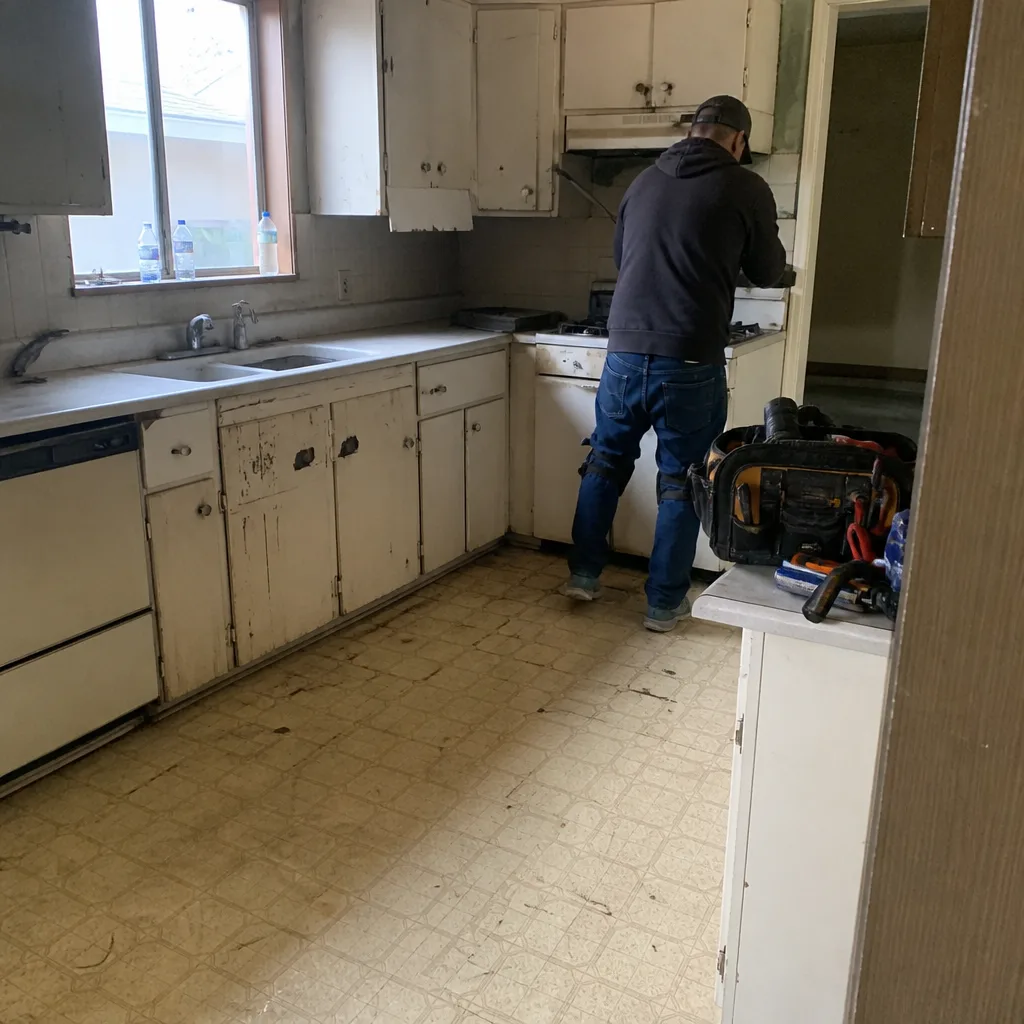
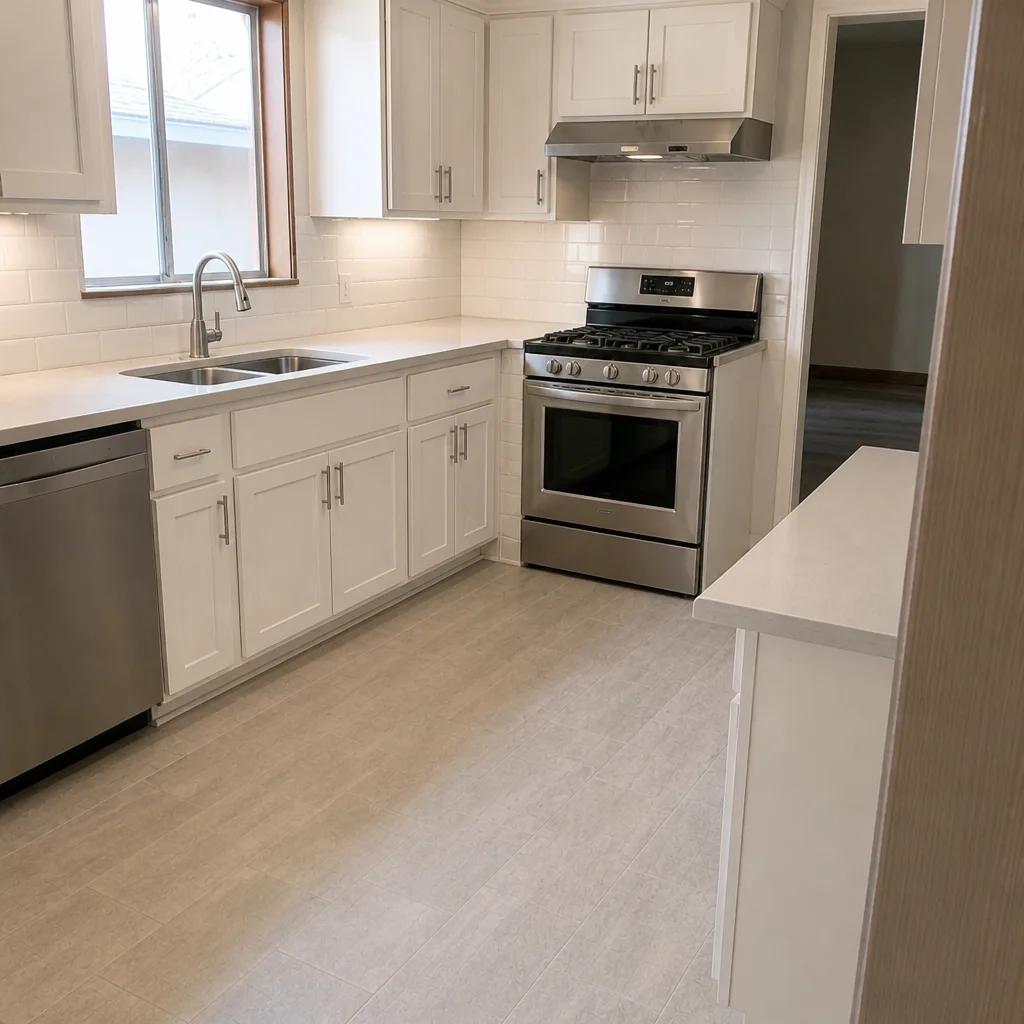
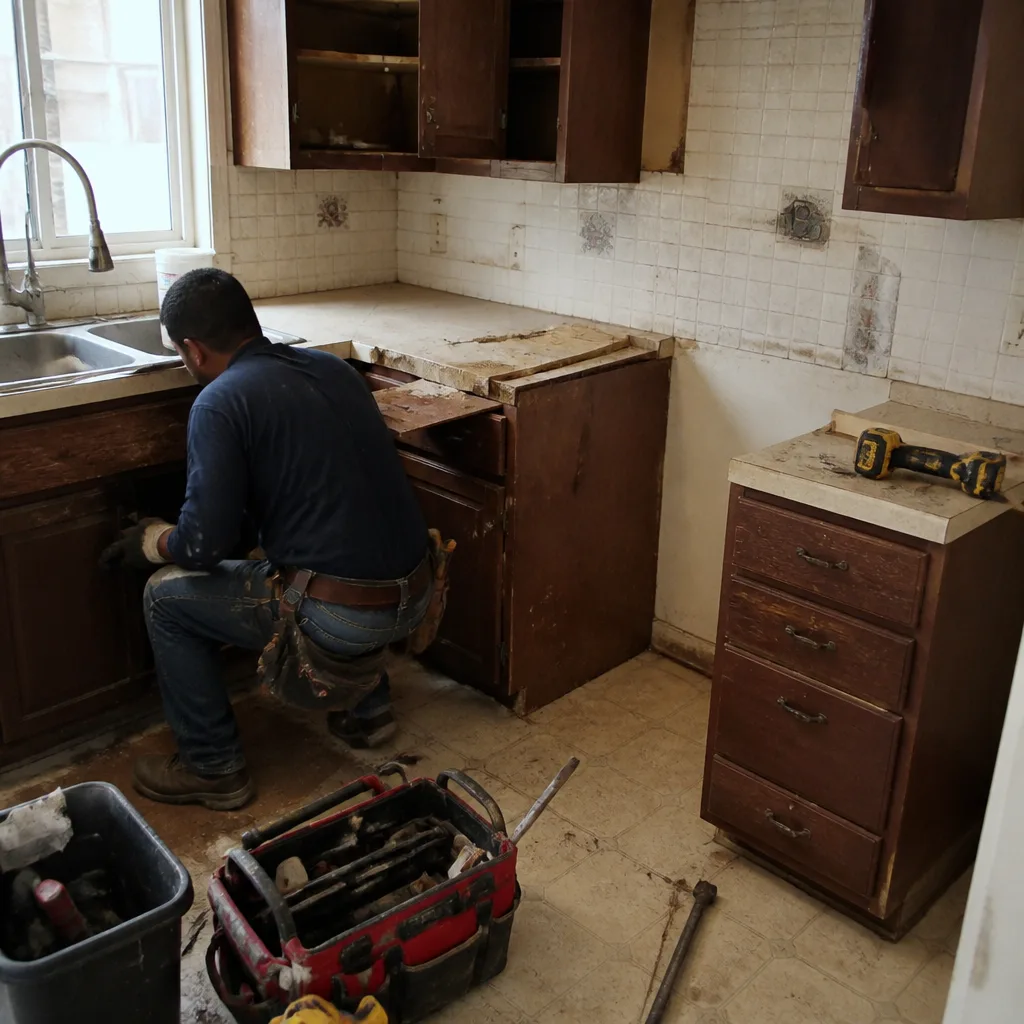
See the difference
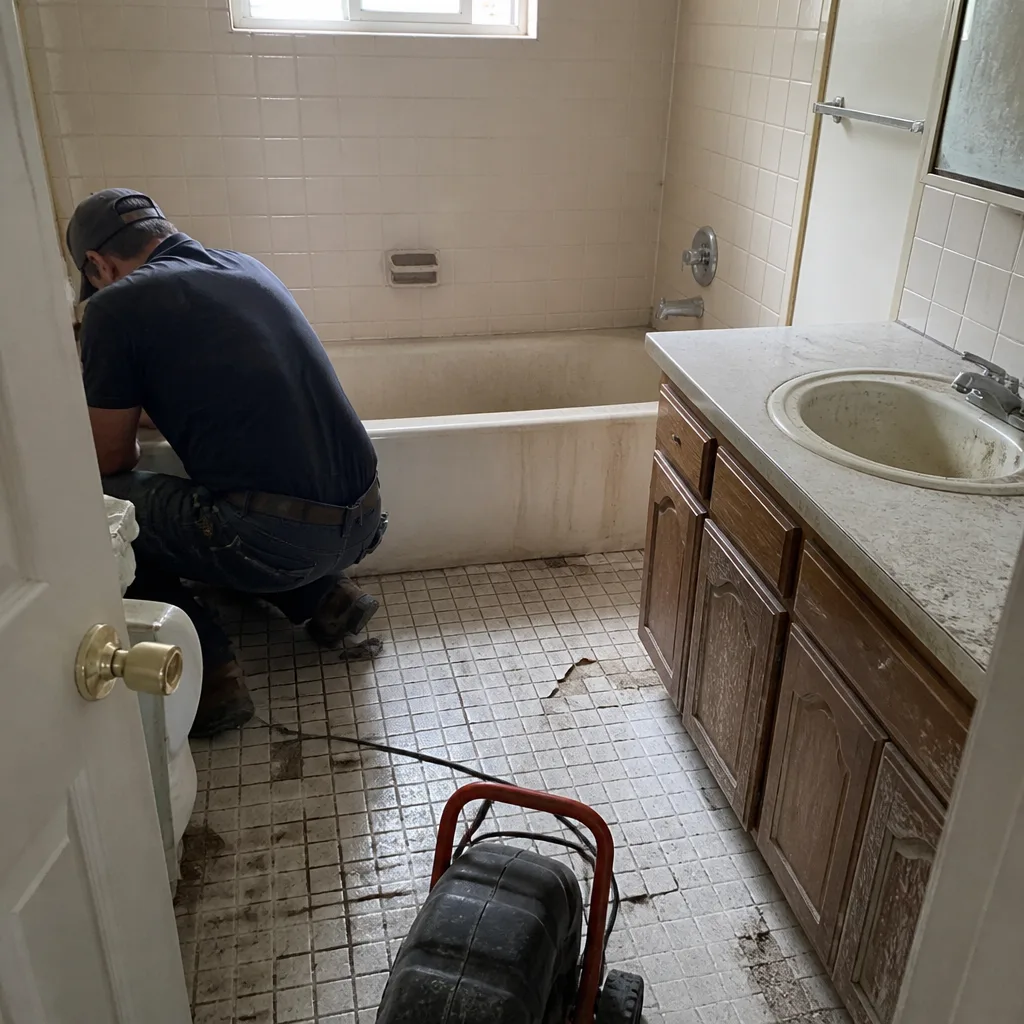
 Before
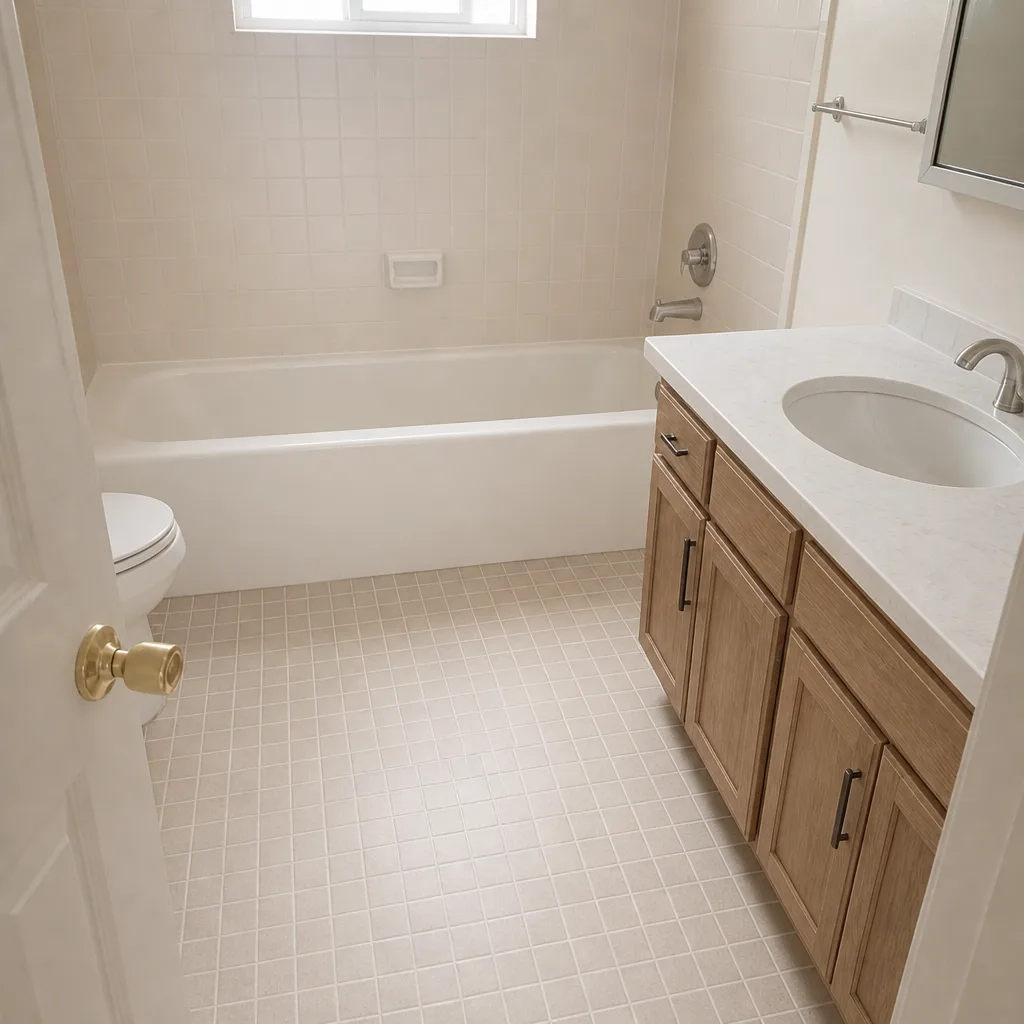
 After
 Before
 After
 Before
 After
When to Call a Professional
Call a professional the moment any of these is true: the work touches a shower pan, a waterproofing membrane, drain or vent relocation, electrical rough-in, gas lines, load-bearing framing, or anything that requires a permit in Solano County. Call when you’re not certain whether you need a permit, because the answer is often “yes” and the cost of being wrong is real. Call when a project is on a timeline and a hybrid scope needs someone with a 730-Day Done Right Promise holding the workmanship warranty. And call when the DIY work has failed – a soft spot in a shower, water staining behind tile, a recurring drain smell. Failures caught early are cheap. Failures caught late are not.
Groundwork Construction Co. of Vacaville offers free estimates in Vacaville – call (888) 276-8078. We answer with a live person 24 hours a day, every technician arrives background-checked and in uniform, and every estimate comes with an upfront price you can hold us to. Our technicians have up to 12 years of experience in Vacaville bathrooms, and the work is covered by the 730-Day Done Right Promise. If the scope is a hybrid, we’ll put the boundary lines in writing before anyone lifts a hammer.
Frequently Asked Questions
You need a permit if you’re relocating or adding plumbing fixtures, moving electrical circuits or adding outlets/GFCIs, moving structural framing, installing a new exhaust fan duct through the building envelope, or reconfiguring a shower footprint. Replacing a faucet, toilet, or vanity in the same location usually does not require one. If your project touches any of the permit triggers, contact the Vacaville Building Division or have your contractor confirm the scope in writing. Pulling the right permits protects your resale and keeps you on the right side of code enforcement. Call (888) 276-8078 for a free scoping estimate.
No. This is the single most expensive DIY mistake we see. The pan liner has to be presloped to the drain, sealed at the curb, and free of any nail or puncture that leaches water into the subfloor. A failed liner isn’t visible for 12 to 36 months, and the repair means tearing out the shower and often the subfloor. The pro cost is a few hundred dollars for that phase; the repair cost is thousands. Call (888) 276-8078 if you’re unsure and want a free estimate on the professional phase.
Yes, and this is one of the cleanest hybrid scopes you can run. The waterproofing and the tile are two different phases. Have the pro install the substrate and membrane, inspect the waterproofing, then tile it yourself if you’re comfortable with it. Keep those two phases cleanly separated in the scope document, and photograph the waterproofing before you start setting tile. If the boundary is written down, the warranty holds. Call (888) 276-8078 to scope a hybrid bathroom in Vacaville – the estimate is free.
It depends on where the DIY work lands relative to the pro work. DIY work clearly outside the pro’s perimeter – painting, replacing a toilet, regrouting – doesn’t affect a workmanship warranty. DIY work on the same wet-area system the pro is warranting – the shower pan the pro installed and the tile you set over it, for example – frequently creates a warranty exclusion. Ask for the scope in writing before you sign. Groundwork’s 730-Day Done Right Promise covers what we touch, and the written scope shows exactly where that coverage begins.
Realistic savings from DIY on a typical Vacaville bathroom range from $1,800 to $4,500, depending on how much painting, demo, and finish work you handle. Painting the walls and ceiling saves $600 to $1,200. Demo saves $400 to $900. A vanity swap saves $400 to $800. Regrouting saves $300 to $700. The catch is any improper scoping that causes a change order later. Call (888) 276-8078 for a free estimate that separates DIY phases from pro phases – the quote is written with line items so you can see exactly what you’re saving.
A typical hybrid bathroom remodel runs four to seven weeks, with the pro phases taking roughly two to three of those weeks and lead time on tile and cabinets accounting for most of the rest. A simple professional-only bathroom runs three to five weeks; a hybrid run adds roughly one week for coordination, especially if permits and inspections are involved. Materials lead times in Vacaville can stretch the timeline further, so lock in your tile and cabinet order early. Call (888) 276-8078 to schedule a free estimate and design consult – we walk timelines in writing.
The Bottom Line
The question isn’t whether you’re capable. It’s whether the work you’re about to do will pass inspection, hold up to moisture, and not void a warranty when the next contractor opens the wall. Paint it, regrout it, swap the toilet, change the faucet, and repaint the vanity with confidence. Leave the shower pan, waterproofing membrane, drain relocation, electrical, and gas lines to a pro. Pull the permit. Get the scope in writing. Keep a photo record. Do that, and your Vacaville bathroom remodel ends with a bathroom that lasts ten to twenty years, not three. The pro cost on the wet-area line items is real, but it’s less than the repair bill when a homeowner crosses that line and only discovers it two years later.
Groundwork Construction Co. has been in business since 2014 and serves homeowners across its markets, and every project carries the 730-Day Done Right Promise. Upfront pricing, no surprises. From foundation to finish line. Calls answered by a live person, 24/7. From KraftMaid and Kohler bathroom cabinets and fixtures to Cambria vanity tops, we work with the brands that let a Vacaville bathroom hold up to the seasons and to the years. Quality materials and an experienced crew, backed in writing.
If you’re ready to plan the professional phase of a Vacaville bathroom – or to get a second set of eyes on a project you’ve already started – call (888) 276-8078 for a free estimate. The estimate and design consult are free. The scope is written. The 0% financing for 18 months and $1,000 off projects over $10,000 are standing offers. Line up the conversation before you buy the first box of tile.
Written by the team at Groundwork Construction Co. of Vacaville.