Last updated November 18, 2026



Free written scope consultation - allowances, timeline, and change-order rules on paper before a single trade is scheduled
Fence Installation Troubleshooting: Common Problems and How to Fix Them
Here’s the part most fence articles skip: leaning, sagging, and gap-widening fences are almost never the fault of the wood, the wind, or plain bad luck. They trace back to the day the posts went in – how deep, how wide, what was packed around them, and how the panels were attached. We’ve walked more than a few Vacaville backyards where a homeowner braced a leaning post with a two-by-four and called it fixed, only to watch it lean again by the next wet season. This guide is about diagnosing the actual cause and choosing the repair that holds, so you fix it once instead of every spring.
Quick Answer
A leaning, sagging, or warping fence is usually the result of a shallow post footing, a footing set in the wrong soil, or water reaching untreated wood at the base. The durable fix for a leaning post is almost always to pull the post and rebuild the footing, not to brace it from the side. Panel and gate problems have separate, simpler repair paths covered below.
Styles & brands we work with
- Kitchen remodeling
- Bathroom remodeling
- Home additions & ADU
- Roofing
- Windows & doors
- Driveway & pavers
- Fence
Table of Contents
- How to Diagnose a Leaning Post: Footing, Soil, or Rot
- Why Fence Panels Warp, Bow, and Develop Shrink Gaps
- Gate Sag: Hardware, Hinge, or Rebuild?
- Reading Wood Discoloration Before It Becomes Rot
- Vinyl and Metal Fences: Different Materials, Different Failures
- The Footing Decisions That Prevent the Whole Problem
- A Realistic Repair Sequence: What to Do in Order
- Common Mistakes to Avoid
How to Diagnose a Leaning Post: Footing, Soil, or Rot
A leaning fence in Vacaville usually falls into one of three failure categories, and the repair path is completely different for each. Get this diagnosis right and you save hundreds of dollars and a repeat failure next winter.
1. Footing failure. The post lifts, rocks, or pulls straight up from the ground when you push on it. Look for a visible gap collar around the base or cracks fanning out in the adjacent concrete. In Vacaville this shows up most often along older property lines where posts were set only 18 to 24 inches deep, well short of what our clay-heavy soils demand. The fix is post removal and re-set to proper depth. Bracing hides it for a season and then fails.
2. Soil movement. The post itself is solid in the ground but the ground around it has heaved, dropped, or expanded. The post leans consistently in one direction, and neighboring posts lean the same way. This happens in Vacaville’s expansive adobe clay after a wet winter, when the soil swells and loosens footings that were never widened properly. It’s a footing-and-soil fix, not a wood fix.
3. Structural rot. The post leans, and the wood at or below grade is soft, spongy, or crumbles under a screwdriver test. There’s often no concrete visible, or the concrete collar has separated from the wood. This is the worst of the three because the post is compromised from the inside, and any bracing just gives the rot a lean to follow. Replacement is the only answer.
To narrow it down, push firmly on the post at mid-height. If the whole assembly rocks, it’s footing or soil. If it holds but the surface fails a probe test at the base, it’s rot. If the post is firm and the neighbor posts lean identically, it’s soil movement. Post replacement, done properly, is a one-day job for a two-person crew and a light crane or post extractor – and it starts the fence on a footing that will actually hold a line for the next 15 to 20 years. For a deeper look at proper set-up, our fence installation in Vacaville page covers the specs we build to.
Why Fence Panels Warp, Bow, and Develop Shrink Gaps
Wood panels that bow or cup are reacting to how the boards were milled, when they were installed, and what’s behind them. In our experience across Vacaville, three causes explain the vast majority of panel complaints:
- Green lumber installed too soon. If boards go up wet and full of natural moisture, they shrink as they dry and register as cupping and gaps. A 4- to 6-week dry period (or kiln-dried material) makes the difference between a fence that holds tight and one that starts separating by August.
- Boards attached flush to rails without airflow. Wood needs a small gap and air movement to dry evenly. Panels nailed tight to the rail develop moisture traps that cup and bow over a season.
- Face-nailed pickets with no backing. Standard pickets with six or more nails per rail hold a line better than three-nail installs. Under-nailed boards cup and sag individually, creating the “wavy fence” look common on older Vacaville properties.
When a 40-foot stretch of dog-eared cedar or redwood pickets shows uniform cupping, the fix is usually to replace individual boards, re-nail adjacent pickets to the rail, and add a top cap to redirect water. If cupping is random and spots of rot appear mid-panel, the whole run needs replacement because the wood’s integrity is gone. Battens or cover boards hide gaps cosmetically but don’t stop structural movement – we’ve been called to remove more battens than we’ve installed.
Gate Sag: Hardware, Hinge, or Rebuild?
Every gate sags eventually, but the fix depends on where the sag originates. Run through this sequence before buying anything:
- Test the gate swing with the latch disengaged. If the gate still hangs square and only the latch catches, the hardware is out of alignment. Adjust the hinges or strike plate.
- Check the hinge plate. Loosen the top hinge pivot and see if the gate drops. If it moves freely, the hinge is fine and the problem is the gate frame.
- Inspect the gate post itself. Push on it at the top. If the post moves more than a quarter inch, the post has footing or soil issues and hinges won’t fix it.
- Look for diagonal bracing. A properly built gate has a diagonal or Z-brace transferring weight to the hinge post. Gates without it sag progressively because there’s no structural path for the load.
Hardware adjustment is a fifteen-minute fix. Hinge replacement takes about an hour and a better grade of hardware – stainless ball-bearing hinges handle the load far better than the builder-grade ones that ship with most kits. A full frame rebuild with a proper diagonal brace is the answer when the gate frame has warped or the gate post has failed, and it usually adds 8 to 12 years to the gate’s life. In Vacaville, gates on west-facing fences degrade fastest: afternoon sun dries and shrinks the frame, the latch loses alignment, and the gate sags a little more each summer. That’s an orientation problem, not a hardware problem.
Reading Wood Discoloration Before It Becomes Rot
Discoloration is a diagnostic, not just an aesthetic issue. Where the stain or fade sits tells you whether the fence is aging normally or failing from within.
Gray on the sun-facing side is surface weathering – lignin breaking down under UV, essentially cosmetic. It sanding-and-refinishing solves it in a weekend. No structural risk.
Black or blue-gray streaks and fuzzy green patches on shaded panels are mildew and algae. The cause is moisture trapped between boards, usually from lack of airflow or a downspout discharging onto the fence. Clean, dry, add drainage.
Orange-brown staining at the base is the early indicator of rot. If the wood is soft when pressed near the staining, the post is already compromised and should be tested more thoroughly. Yellowish spalting inside cracks is advanced decay and means replacement, not treatment.
Vacaville’s dry summers and damp winters concentrate moisture damage in the first 8 inches above grade. That’s exactly where sprinkler overspray hits, where runoff pools, and where most rot shows up first. Our home and construction services overview covers how we evaluate and repair the whole exterior, and it’s worth reviewing before investing in a repair if the rot has reached the framing.
Vinyl and Metal Fences: Different Materials, Different Failures
Vinyl and metal fences don’t decay, but they fail – and their warning signs are easy to miss.
Vinyl (Bufftech, ActiveYards): Vinyl’s failure mode is heat and stress, not rot. Watch for:
- Sagging rails directly adjacent to a gate, which indicates a post footing that’s drifting.
- Panel bulging in full sun, usually because the installer omitted the manufacturer’s specified post spacing or expansion gap.
- Post cracking at grade – vinyl gets brittle in cold and can shear if the footing wasn’t set with proper drainage.
- Fade and chalky film, usually cosmetic, but on a badly installed run it signals a stress problem that will show up later.
Vacaville’s summer heat pushes vinyl toward its expansion limit, so 90-plus-degree afternoons expose badly-spaced runs. Repairs mean replacing the specific section rather than the whole fence when the failure is localized.
Aluminum and ornamental steel: Metal fences rarely fail at the panel – they fail at the anchors. Watch for rust bleeding at welds and the powder coat flaking around fasteners. Loose anchor cups at the base mean the anchor is losing grip in the footing and the whole run can shift. Before rust becomes structural, it’s a touch-up and anchor replacement. Once a post is rusted through at the weld, that section needs replacement. A local install with quality parts like pavers and hardscape work done alongside the fence sets a good foundation, but the fence itself needs its own attention.
The Footing Decisions That Prevent the Whole Problem
Here’s the core of the guide: most fence failures stem from one of about three footing decisions. Get them right at install and the troubleshooting list above largely disappears.
Depth. Set posts below the frost line and, in Vacaville’s clay-heavy soils, deeper than you’d expect. A common builder shortcut is 18 to 24 inches. We set to 30 to 36 inches on a long run.
Width and concrete volume. A narrow footing can’t resist the lever of a 6-foot post in a winter wind. Wider footings with proper concrete volume hold the line – gravity pulls concrete against the soil, not against the post.
Drainage and wood treatment. The post needs to sit above the standing water line, and any below-grade wood needs proper treatment. A dome or slope at grade directs rainwater away from the wood.
If you’re comparing estimates, this is the conversation that matters. Our construction projects and ADU builds in Vacaville follow the same structural fundamentals used on fences, and we’d rather build a fence that doesn’t need to be diagnosed than repair one that does. Upfront pricing, no surprises – the number you see on the estimate is the number you pay.
A Realistic Repair Sequence: What to Do in Order
When a fence run shows multiple problems, here’s the order that produces a fix rather than a patch:
- Assess footing integrity on every post. Push-test at mid-height on each post. Note any that move more than a quarter inch and any that fail the wood probe test at grade.
- Confirm whether the failure is localized or systemic. One bad post in a line of tight posts is a standalone repair. Three leaning posts on one side of the yard usually mean the footing depth is wrong across the run.
- Fix the source first. Correct drainage, remove the sprinkler overspray, or replace the failed post footing before touching cosmetic issues. Panels don’t stay repaired on a moving frame.
- Replace fasteners and hardware during the repair. Stainless posts nails and high-grade hinges cost little more than builder-grade, and they remove the second most common failure path.
- Re-level and re-plumb as you go. Set the new post, let the concrete cure fully, then attach the panel. Rushing this step is how a repaired fence ends up leaning by spring.
- Add a top cap and finish coat. A cap redirects rain off the panel tops, and a wood sealer extends the repair’s life. It’s the cheapest insurance you can buy on a repaired fence.
A full replacement of a failed post typically runs a few hundred dollars, whereas a complete run rebuild is a several-thousand-dollar project. Get the sequence right and you’re buying the smaller number. Background-checked, uniformed technicians handle the whole sequence in a single visit in most cases, and the fence installation service gets it right from the start.
Common Mistakes to Avoid
- Bracing a leaning post from the side. Two-by-four braces transfer load to the next section, which then fails. In Vacaville’s clay, this failure cascades a full run within two winters.
- Setting a post shallower than the failed one. If the original was 18 inches and failed, replacing it at the same depth guarantees the same outcome. Match footing depth to soil and wind load, not to convenience.
- Painting over rot. Paint and stain on compromised wood trap moisture and accelerate the failure. Test the wood before finishing it.
- Skipping the expansion gap on vinyl. Installers who botch this leave bulging panels by the second summer. Follow the manufacturer’s specs exactly, or hire a team who will.
- Re-using hardware that’s already failed once. Hinges and fasteners fail in place. Replace them with higher grade when the opportunity opens.
- Fixing the cosmetic issue before the structural one. Gaps and discoloration are symptoms. Treat the footing and post before touching the panel or finish.
- Not pulling a permit where Vacaville code requires one. Fence height and setbacks matter for property-line fences and for corner-lot sightlines. A permit-pulled job avoids fines and reverses a repair after the fact.
See the difference
 Before
 After
 Before
 After
 Before
 After
When to Call a Professional
Call a professional when a post has failed its footing, when multiple posts lean the same direction, when the rot has reached the framing at or below grade, or when the gate post shows movement under load. Do-it-yourself post replacement without the right equipment risks injury and often leaves the footing deeper and stronger than you can set on your own. Groundwork Construction Co. of Vacaville offers free estimates in Vacaville – call (888) 276-8078 – and every repair is covered by our 730-Day Done Right Promise. If it’s not done right, we make it right. Calls are answered by a live person, 24/7, and there’s no voicemail to wait behind.
Frequently Asked Questions
A leaning post repair typically runs a few hundred dollars for a single post, and a full run rebuild is several thousand dollars depending on footage, material, and access. We give you a written line-item quote before any work starts, so the number you see is the number you pay. Call (888) 276-8078 for an exact quote – estimates are free.
No. Upfront pricing, no surprises is the standard on every project. If we discover a footing or rot problem the estimate missed, we stop and re-quote before doing the additional work. No change orders are issued without your approval.
Yes. Where Vacaville code requires a permit for height, setbacks, or property-line fences, we pull it and pass inspection as part of the job. That protects your investment and avoids any issues at resale.
Most single-post repairs and hardware fixes are completed in a single visit. Full run rebuilds typically take one to three days, depending on linear footage and material curing time. We’ll give you a realistic timeline in writing before we start.
No. Vinyl failures usually trace to post spacing, expansion gaps, or footing drift, and repairs require replacing the affected panel and hardware rather than re-setting a wood post. Brands like Bufftech and ActiveYards specify exact requirements, and matching them is what keeps the repair lasting.
Only if the cupping and rot have compromised multiple boards or the framing. Localized cupping on a few boards can often be replaced without touching the rest of the run. The diagnostic test is whether the soft spots and gaps are isolated or widespread across the panel.
The Bottom Line
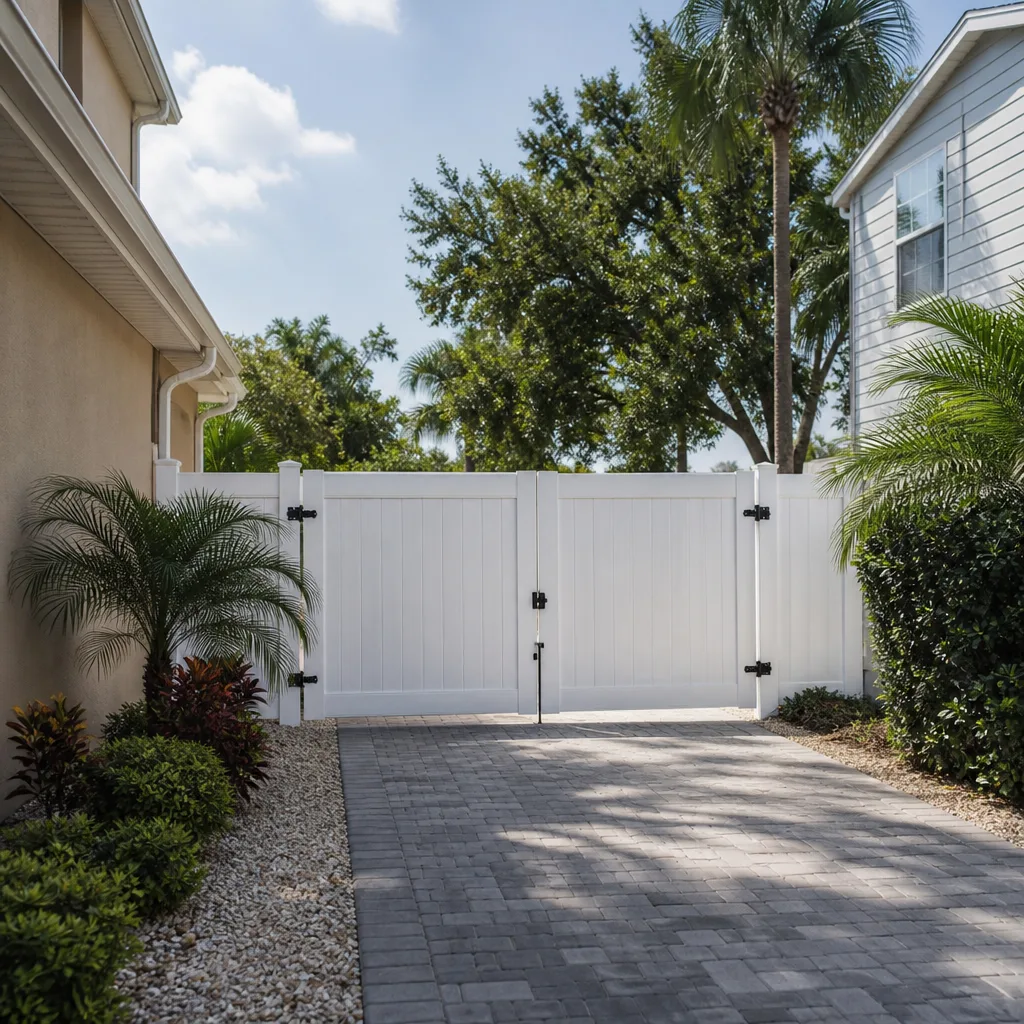
Most fence problems we see in Vacaville aren’t random – they trace to footing depth, footing width, drainage, or fastener choices made on install day. Diagnosing the actual cause is the first step: a leaning post is a footing problem, not a wind problem; a warped panel is a moisture problem, not a wood-selection problem. Fix the source before touching the symptom, and choose materials and partners (ActiveYards and Bufftech for vinyl, stainless hardware for gates) that won’t repeat the failure. Every repair we complete is covered by the 730-Day Done Right Promise, backed in writing, and every quote is a no-hassle upfront price.
If you’re facing a fence problem in Vacaville and want it diagnosed and fixed properly the first time, call (888) 276-8078 for a free estimate. Our technicians have up to 12 years of experience, arrive in uniform, and are background-checked on every job. We’ll assess the cause, quote it clearly, and get your line back to standing straight.
Written by the team at Groundwork Construction Co. of Vacaville.