Last updated November 18, 2026

Free written scope consultation - allowances, timeline, and change-order rules on paper before a single trade is scheduled
Driveway & Pavers Maintenance Checklist for Vacaville Homeowners
Vacaville’s expansive clay soils shift more in a single dry summer than most of California’s coastal ground shifts in five years. That movement is the number one reason pavers crack, separate, and sink here faster than homeowners expect. We’ve watched brand-new driveways in Browns Valley open up half-inch gaps by their second August, not because the installer cut corners, but because nobody explained what clay does when it bakes dry and then swells with the first real rain. This checklist is built around that reality. You’ll get a maintenance calendar tuned to Vacaville’s heat and clay, a simple test to tell cosmetic sand loss from structural base failure, and the exact steps that keep your manufacturer warranty intact.
Quick Answer
In Vacaville, a driveway paver system needs joint sand topped up every fall, a full inspection after each wet season, and re-sealing every 3 to 5 years depending on whether you have concrete pavers or clay brick. The single most important habit is checking for joint sand loss before the rainy season starts, because once water gets under the pavers into Vacaville’s clay subsoil, movement accelerates fast. Do those three things and a properly installed driveway can hold its lines for 20-plus years.
Styles & brands we work with
- Kitchen remodeling
- Bathroom remodeling
- Home additions & ADU
- Roofing
- Windows & doors
- Driveway & pavers
- Fence
Table of Contents
- Why Vacaville’s Clay Soil Sets the Rules
- Your Four-Season Pavers Maintenance Calendar
- Cosmetic Sand Loss vs. Structural Base Failure: The Visual Tests
- Which Sealer Holds Up Against Vacaville’s 95°F+ Summers
- Pressure Washing: Concrete Pavers vs. Clay Brick Pavers
- The Three Maintenance Skips That Void Your Warranty
- Weeds, Moss, and Efflorescence in a Dry-Heat Climate
- Drainage and Grade: The Part Everyone Forgets
Why Vacaville’s Clay Soil Sets the Rules
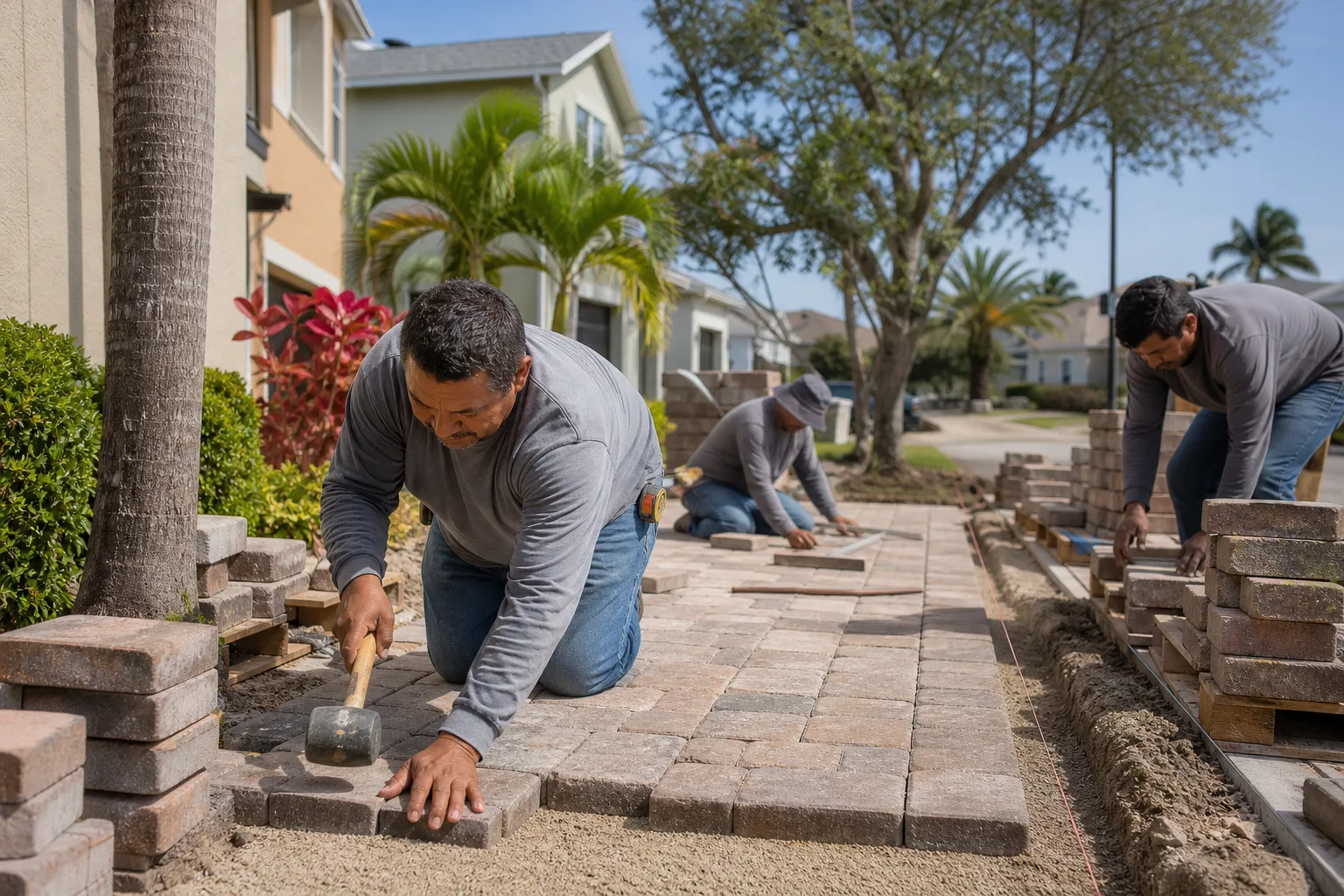
Generic driveway maintenance advice tends to come from two places: the wet Pacific Northwest, where moss and constant moisture are the enemy, or the Midwest, where freeze-thaw cycles heave pavers out of the ground every spring. Neither fits Vacaville. Here, the problem is the opposite: our summers dry the ground out hard, our expansive clay shrinks and pulls away from the sub-base, and then the first substantial rain of November makes it swell right back. That swell-and-shrink cycle, repeated year after year, is what works pavers loose from their bedding layer.
Walk a driveway in Nut Tree or down near the newer subdivisions off Allison Drive and you can often see the evidence in the joints alone. Sand washes out, gaps widen, and a paver that sat flat in April now rocks slightly underfoot by October. None of that means the installation was bad. It means Vacaville’s ground is active, and a paver system is only as stable as the base underneath it.
What does that mean for you? Three practical rules follow from it:
- Timing matters more than frequency. A joint sand top-up in October does more good than three top-ups spread randomly through the year, because it lands right before the swelling starts.
- Water management beats stain removal. Keeping surface water draining away from the driveway edge prevents far more damage than any cleaner or sealer.
- Small fixes stay small. A rocking paver caught in the fall is a 20-minute reset. The same paver ignored for two winters can become a settled section that needs the base re-done.
We build and repair pavers throughout Vacaville, and the homes that age best are almost always the ones where a homeowner spent 30 minutes a year checking joints and drainage. That’s the whole game.
Your Four-Season Pavers Maintenance Calendar
Generic guides split maintenance into “spring cleanup” and “fall prep.” That’s close, but it misses the timing that actually matches Vacaville’s climate. Here’s the calendar we’d hand a Vacaville homeowner, month ranges and all.
Spring (March – May): The Recovery Inspection
- Late March: Walk the entire driveway and look for any paver that rocks or sits low. The winter swelling is at its peak, so problems are most visible now.
- April: Top up joint sand on any sections where it’s dropped below the chamfer (that little beveled edge on each paver). Don’t skip the edges near the lawn.
- May: Clear the expansion joints at the driveway apron and where the driveway meets the garage slab. Debris in those gaps forces the pavers to push against the slab instead of moving freely.
Summer (June – September): The Heat-Protection Phase
- June: Check for efflorescence (the white chalky film that appears when moisture moves through the pavers and evaporates). Vacaville’s dry heat pulls salts to the surface.
- July – August: Spot-check for any paver that’s starting to shift. Heat expands concrete pavers slightly, and an already-loose paver will show it now.
- September: Clean before the wet season. Do this before you top up sand, not after.
Fall (October – November): The Critical Season
- October: Re-sand every joint completely. This is the single most important task on the list, because it seals out the winter rain that drives clay movement.
- November: Check the grade. Water should flow off the driveway and away from the foundation, not pool against the garage or the lawn edge. If you see standing water after the first big rain, address it before winter sets in.
Winter (December – February): The Watch-and-Wait Phase
Vacaville winters are mild, but that’s exactly what makes them sneaky. We don’t get the deep freezes that would crack a paver outright, so problems build quietly. Keep an eye out for pooling water after storms, and sweep any mud or soil that washes onto the driveway before it works its way into the joints. That’s it. Winter is inspection season, not maintenance season.
If you’re in the middle of a larger homescape project, the same timing principles apply to fence posts and additions, which is why we approach Fence Installation in Vacaville with the same attention to Vacaville’s clay base.
Cosmetic Sand Loss vs. Structural Base Failure: The Visual Tests
Here’s the question that decides whether you’re looking at a $60 bag of sand or a $4,000 repair: is the problem at the surface or in the base? Almost every homeowner conflates the two. We don’t. Run these three tests and you’ll know exactly which you’re dealing with.
Test 1: The Rocking Paver
Step on each paver along a diagonal line. If any of them rock or tilt even slightly, that’s a base problem. A paver that’s properly bedded should not move underfoot, period. Rocking means the sand bedding layer has shifted or the base has settled unevenly underneath. Sand top-up won’t fix it.
Test 2: The Joint Depth Check
Press a screwdriver into the joint between two pavers. If the sand is at least a quarter-inch below the paver surface, it’s cosmetic sand loss, and a top-up will fix it. If the joint is empty all the way down to the base, the sand has washed out repeatedly and you have a base issue underneath.
Test 3: The Water Test
Pour a cup of water on the driveway and watch where it goes. If it drains away within a minute or two, good. If it pools on the surface or drains into the joints and disappears instead of running off the edge, you have a drainage or permeability problem, and re-sealing won’t fix it. On clay brick pavers, water that soaks in and then can’t drain away is the fastest way to a winter fail.
Here’s the rough scale we use: if all three tests pass, you’re doing maintenance. If two or more fail, you’re looking at a base repair. And if you’re seeing settling over a wide area, especially along the apron near the garage, the fix becomes a reconstruction of that section, not a sand job. That’s the moment to call a professional, and it’s exactly the kind of work we do through our Driveway & Pavers in Vacaville service.
One local note: we see more base issues on driveways built on the sloped lots in the Browns Valley and Vaca Valley areas than on flatter ground, because water that doesn’t drain off quickly works its way under the pavers at the low edge. On flatter parcels, sand loss is the more common culprit. Walking your specific driveway with that in mind saves you from chasing the wrong problem.
Which Sealer Holds Up Against Vacaville’s 95°F+ Summers
Not all sealers are created equal, and in Vacaville’s heat, choosing wrong wastes money and can actually harm the driveway. Here’s the breakdown we use when advising homeowners.
There are two main sealer families: film-forming sealers (acrylic-based) and penetrating sealers (siloxane or siliconate-based).
- Penetrating sealers soak into the paver and block moisture without leaving a coating on top. This is what we recommend for most Vacaville homes, because they let the paver breathe, so any residual moisture can escape without trapping it underneath.
- Film-forming acrylic sealers leave a glossy coating on the surface. They look sharp for the first summer, but Vacaville’s UV intensity breaks them down fast. Two to three summers is typical before they start to peel, and once they peel, water gets in through cracks in the coating and then can’t escape. That’s the trap. The coating was supposed to block water, and instead it traps it.
When to Re-Seal
Vacaville’s UV index is high enough that even a good sealer breaks down faster here than on the coast. Plan on re-sealing every 3 to 5 years for concrete pavers and every 2 to 3 years for clay brick, which is more porous and absorbs more UV. If you can see the driveway starting to look “thirsty,” or water beads less after a spray bottle test, it’s time.
The Manufacturer Angle
Belgard and Tremron both publish sealer compatibility guidance for their product lines, and using a sealer that’s outside that guidance can void portions of the warranty. If you’re unsure, use a sealer that’s explicitly approved for the brand of paver you have. That’s a five-minute check that can save you a warranty headache.
Pressure Washing: Concrete Pavers vs. Clay Brick Pavers
This is where dry-heat climates and wet climates demand different thinking. In wet climates, pressure washing is mostly about removing moss and algae. In Vacaville, it’s about removing embedded dust, pollen, and the fine soil that blows in during our long dry season.
Concrete Pavers
Concrete pavers can typically handle a standard pressure-washing pass at low to medium pressure (around 1,200 – 1,500 PSI) with a fan tip. The key is to move the wand constantly and never hold it in one spot. High pressure right at the joint surface can blow out the sand, and then you’ve created the very problem you were trying to prevent.
Clay Brick Pavers
Clay brick pavers are more forgiving of pressure in one sense and less in another. They don’t surface-etch the way some concrete does, but their joints are more sensitive to disruption, and their surface is more porous, so high pressure drives water into the body of the brick instead of off the surface. Use lower pressure and a wider fan. And pressure wash before re-sanding, never after.
How Often?
If you live near an active construction area or a busy road, annual pressure washing is fair. On quieter Vacaville streets, every two years is plenty. The real trigger is visual: if the driveway looks muddy or dull after a normal rain, it’s due for a wash.
One caution we always give: don’t pressure wash within a few weeks of a fresh sealer application. Trapped moisture is the enemy, and a fresh sealer coat is the most vulnerable time.
The Three Maintenance Skips That Void Your Warranty
Almost every paver manufacturer warranty has maintenance conditions. Homeowners rarely read them, and that’s how warranty claims get denied. Here are the three skips that come up most often, and how to document that you didn’t skip them.
1. Skipping Joint Sand Replenishment
Joint sand is a structural component, not a cosmetic one. It’s what locks the pavers together so they act as a system instead of individual bricks. When the sand drops, the pavers start to shift, and the warranty claim gets denied because the manufacturer can reasonably say the failure was caused by missing sand, not defective product. Document your re-sanding by keeping the receipt from the bag (with the date) or a dated photo of the completed job.
2. Skipping Sealer Maintenance
For pavers rated for sealing, letting the sealer fail and then leaving it unaddressed is a warranty risk. Not every manufacturer requires sealing, but if yours does, and you skip it, you’re on the hook. Keep a log of your re-seal dates.
3. Skipping Drainage Repairs After Visible Pooling
This one is the most commonly overlooked. If water consistently pools on or next to your driveway through a wet season and you don’t address it, that pooling can weaken the base. A warranty claim after two wet winters of standing water will likely be denied. Document any pooling you see with a photo and a date, then fix it. That record is your defense.
How to Document All Three
You don’t need a spreadsheet. A single folder or a phone album with dated photos of:
- Your driveway after each re-sanding (one wide shot, one close-up of the joints)
- The paver bag label with the date written on it
- Any sealer application invoice or receipt
- Photos of corrected drainage issues
That’s it. It takes about five minutes a year, and it’s what makes a warranty claim go from “denied” to “approved.”
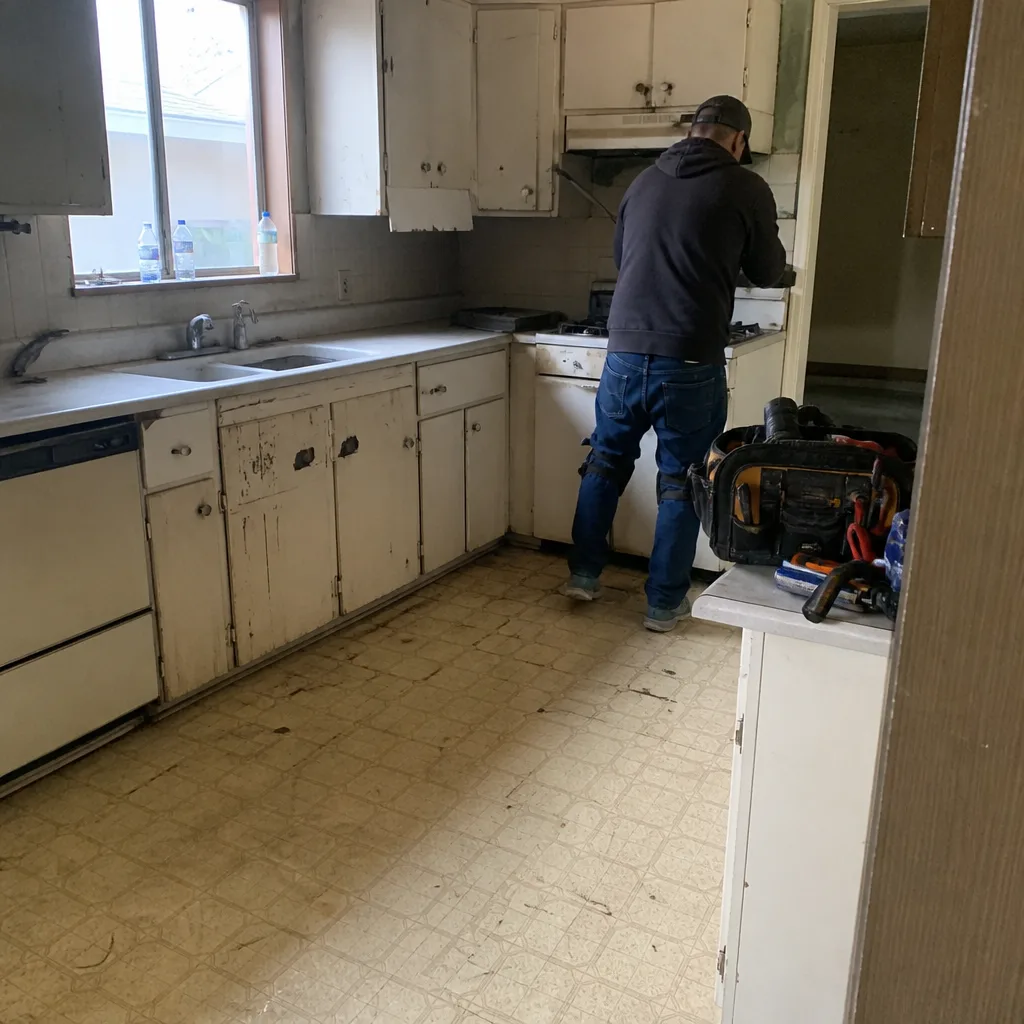
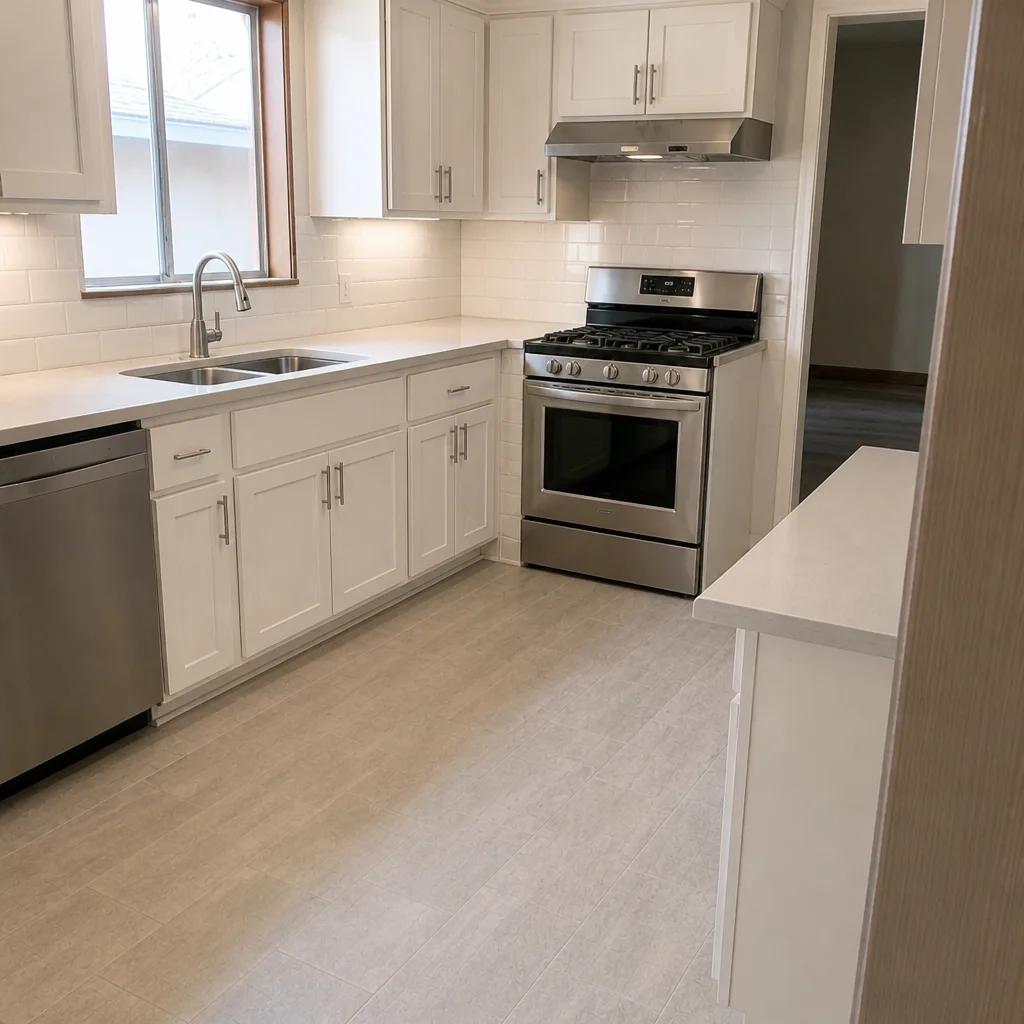
See the difference
 Before
 After
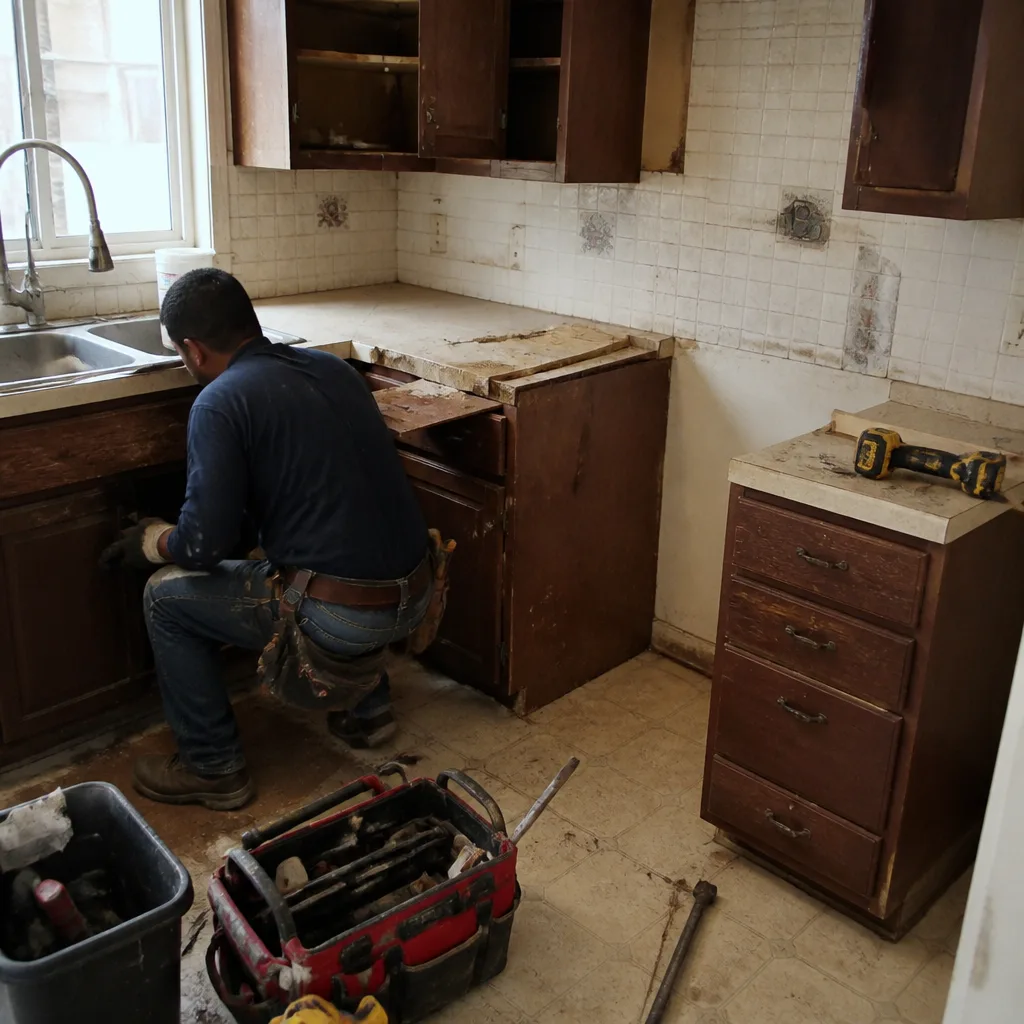 Before
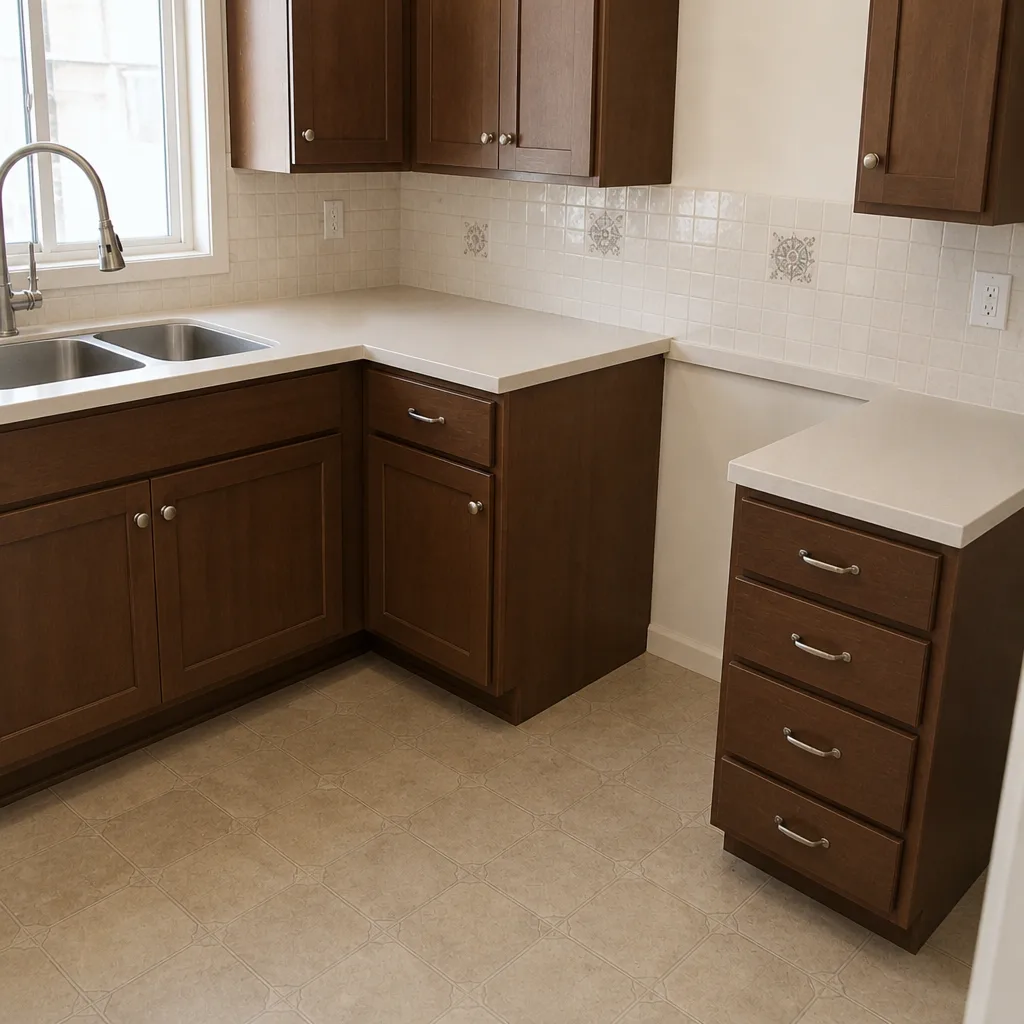 After
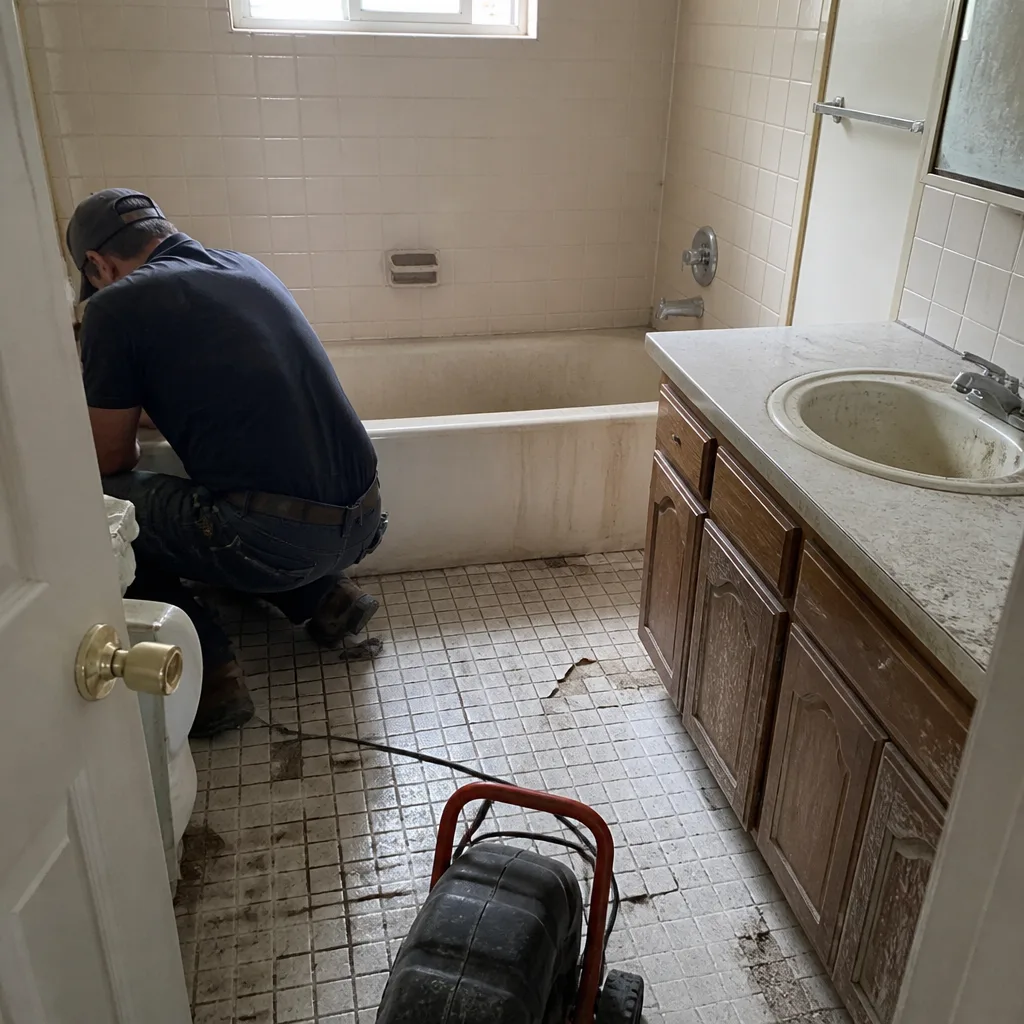 Before
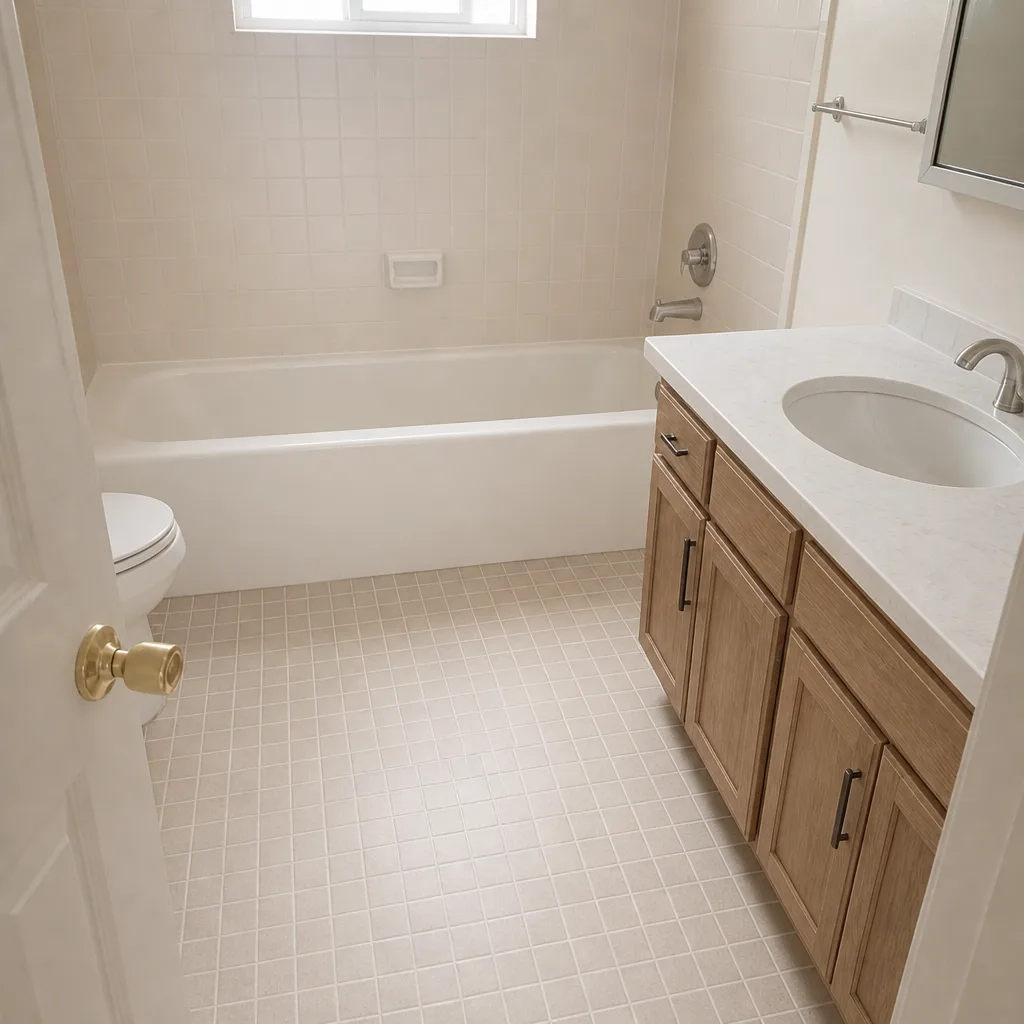 After
Weeds, Moss, and Efflorescence in a Dry-Heat Climate
Vacaville’s dry heat keeps moss mostly out of the picture, but weeds find their way in through the joints, and efflorescence is a recurring summer visitor. Here’s how to handle both.
Weeds
Weeds germinate in the joint sand, and pulling them out by the top just breaks off the stem and leaves the root behind. The fix: pull while the soil is damp (spring or after a rain), getting the whole root. Then re-fill the joint with fresh sand to close the opening. A pre-emergent applied in early spring helps prevent the cycle.
Efflorescence
That white chalky film on pavers is efflorescence, and in Vacaville it appears most in late summer and early fall, because the dry heat pulls moisture and dissolved salts to the surface. It’s harmless and it doesn’t mean the pavers are failing. A specialty efflorescence remover, available at any hardware supplier, handles it. Don’t use muriatic acid straight from the bottle; it can etch the surface and cause long-term damage.
Moss
Moss is uncommon here, but you’ll see it in shaded areas near fences and under overhangs on the north side of a property. A stiff brush and a light vinegar-and-water solution are usually enough. If moss is persistent in a shaded corner, it may be telling you the drainage under that section is off.
These three issues are cosmetic 90% of the time. The bigger concern is what they indicate about the base underneath. Weeds that sprout along a straight line across the driveway are a classic sign of a joint that’s lost its sand and opened up. If you see that pattern, run the visual tests above.
Drainage and Grade: The Part Everyone Forgets
If there’s a single sentence to take from this entire checklist, it’s this: in Vacaville, drainage determines how long your pavers last. Water is what drives clay movement, and clay movement is what breaks paver systems.
Here’s what to check each fall:
- The apron edge (where the driveway meets the garage slab). Water should run off, not settle. If the pavement pitches toward the garage instead of away, that’s a grade issue that needs fixing before winter.
- The lawn edge where the driveway meets soil. If that edge holds water after a storm, it’s eroding the base under the pavers. Fill, re-grade, and re-compact.
- The low point of any driveway that slopes. Look for standing water after rain. If you have a low point that pools, address it with a channel drain or a re-grade of that specific section, not with sealant.
- Gutters and downspouts. Check where your roofline drains. A downspout that dumps water at the driveway edge is the most common silent cause of base failure on Vacaville homes.
Drainage fixes are usually small and cheap when caught early. They become expensive reconstruction jobs when water has been silently working under the pavers for two or three seasons. If you’re doing a project that involves drainage, grading, or larger structural work, that same logic applies to bigger builds, and it’s why we approach Home Additions & ADU in Vacaville with drainage as a first step, not an afterthought.
Common Mistakes to Avoid
- Topping up joint sand only when it looks empty. By the time you notice, the pavers have already started to shift. Sand on a schedule, not on appearance.
- Sealing a wet driveway. The sealer traps moisture under the surface, which accelerates the failure it was supposed to prevent. Always apply sealer after a minimum of several dry days, and never right after rain.
- Skipping the expansion joint at the garage apron. This joint is what keeps pavers from pushing against the foundation. When it’s packed with debris, the pavers are forced to push instead, and cracks appear along the edges.
- Pressure washing high and close. Blowing sand out of a joint at 2,500 PSI is a self-inflicted problem. Low pressure, wide fan, moving wand.
- Ignoring a single rocking paver. A rocking paver isn’t a cosmetic annoyance; it’s the first sign that the base under that section has begun to settle. Fix it when it’s a 20-minute job.
- Skipping a pre-emergent weed treatment. Weeds returning every spring are a sign you haven’t closed off the germination window. One application in early March cuts the summer weed cycle dramatically.
- Choosing a sealer on price alone. Cheap film-forming acne can cost you more in repairs. In Vacaville’s UV, a penetrating sealer that breathes will outlast a cheap acrylic every time.
When to Call a Professional
Most driveway maintenance is homeowner work. But there are specific moments when the smartest move is to call in a professional, and honest ones are worth the call.
Call us if any of these apply: a whole section of the driveway is settling and the pavers are visibly out of level; water is pooling against the house or foundation; the base under a section has washed out and you can see the sub-base; you have a drainage problem that re-grades and sealers won’t fix; or your driveway is showing a pattern of paver movement that suggests the original installation’s base wasn’t built with Vacaville’s clay in mind. These aren’t maintenance issues; they’re structural ones, and they need more than a bag of sand.
We’re a full-scope contractor, and driveway and paver repair is one of our seven core service lines. We offer free estimates in Vacaville – call (888) 276-8078 – and a professional assessment tells you exactly whether you’re looking at a maintenance fix or a base repair, in writing, before any work begins.
Because our work is backed by the 730-Day Done Right Promise, if we do the repair and it’s not done right, we make it right. That’s one of the longest workmanship guarantees in the residential construction space, and it’s why homeowners who’ve been burned by vague bids and disappearing crews call us.
Frequently Asked Questions
Plan on joint sand top-ups every fall, a full visual inspection in spring and again after the wet season, and re-sealing every 3 to 5 years for concrete pavers or 2 to 3 years for clay brick. Vacaville’s clay soil makes timing more important than frequency; the fall sand top-up is what protects you from the winter swelling cycle.
Vacaville’s expansive clay soil shrinks and swells more dramatically than coastal Bay Area soil. Coastal ground stays cooler and more humid, so the shrink-swell cycle is milder. Here, the movement is larger, and it’s why the timing of maintenance matters more on Vacaville driveways. Call (888) 276-8078 for a free inspection if you’re seeing gaps or cracking.
Not always, but a local repair is the right call when the section’s base has failed. If only one area of the driveway is rocking or settling, a spot repair can usually fix it without touching the rest of the driveway. A professional assessment with our free estimate makes that call easy.
A cosmetic fix means the paver itself is fine, but the joint sand has washed out and needs topping up. A structural repair means the base under the pavers has settled, washed out, or shifted, and the pavers need to be lifted and re-bedded. If a paver rocks underfoot, that’s structural, not cosmetic. Call (888) 276-8078 if you’re unsure which you have.
Yes, but pressure washing is best done in spring or fall, before re-sanding. In the peak of summer, wetting hot pavers and then leaving them under 95°F+ sun creates unnecessary stress on the joint sand. If you must wash in summer, do it early morning, and let the pavers dry completely before topping up sand.
Cosmetic joint re-sanding typically runs a few hundred dollars for a standard driveway. A spot structural repair to a failed section starts around $800 to $1,500. A full base reconstruction of a failing section can run $3,000 to $6,000 or more depending on size and access. We offer upfront pricing with no surprises; call (888) 276-8078 for an exact quote, and the free estimate is yours to keep even if you don’t hire us.
The Bottom Line
Vacaville homeowners can get 20-plus years out of a paver driveway, but only if the maintenance calendar respects what the clay is doing under it. Topping up joint sand every fall, inspecting in spring, and re-sealing every 3 to 5 years for concrete pavers (2 to 3 for clay brick) covers 90% of what’s in your control. Run the three visual tests when something looks off, document your work in a folder or a phone album, and don’t ignore a rocking paver. Maintenance keeps the small stuff small; the point of all of this is to keep the big repair from ever happening.
If you’d rather have a professional walk it and confirm, we offer free estimates throughout Vacaville. Groundwork Construction Co. of Vacaville answers every call with a live person, 24/7, and every technician who steps on your property is background-checked and in uniform. Call (888) 276-8078 for your free estimate. Our technicians have up to 12 years of experience, and every project is backed by our 730-Day Done Right Promise.
To see the full scope of what we build, visit our Groundwork Construction Co. of Vacaville home page, or explore our work in Driveway & Pavers in Vacaville.
Written by the team at Groundwork Construction Co. of Vacaville.