Last updated November 18, 2026






Free written scope consultation - allowances, timeline, and change-order rules on paper before a single trade is scheduled
Windows & Doors Troubleshooting: Common Problems and How to Fix Them
If you’ve re-caulked the same window frame three times in five years, you don’t have a caulk problem. You have a flashing problem that caulk keeps hiding. We see this constantly in Vacaville: a homeowner chases a draft or a stain with a tube of sealant, the symptom disappears for one rainy season, and then it comes right back worse than before. Window and door problems are almost never random. They’re symptoms of a root cause, and until you find that root cause, every fix is a band-aid. This guide teaches you to diagnose the actual problem instead of the visible one. You’ll learn to tell a failed seal from a failed rough opening, to separate two kinds of condensation homeowners constantly confuse, and to recognize the specific failure patterns we find in Vacaville homes built between 1985 and 2005.
Quick Answer
Most window and door problems fall into three real causes: water getting in where flashing or the rough opening has failed, settling or movement that throws frames and doors out of square, and seal or hardware breakdown that’s a genuine wear item. The visible symptom (a draft, a foggy pane, a sticking door) points you toward which of the three you’re dealing with. Diagnose the cause before you touch a caulk gun, because sealing over a water-management failure traps moisture and makes the eventual repair more expensive.
Styles & brands we work with
- Kitchen remodeling
- Bathroom remodeling
- Home additions & ADU
- Roofing
- Windows & doors
- Driveway & pavers
- Fence
Table of Contents
- Symptom vs. Cause: Why Most Fixes Fail
- Condensation Between Panes vs. On the Frame
- How to Test Door Alignment: Door, Frame, or Foundation?
- Flashing and Rough Opening: The Water Problem Behind the Wall
- Failure Patterns in Vacaville Homes Built 1985 – 2005
- DIY vs. Band-Aid: When to Fix It Yourself
- Seals, Weatherstripping, and Hardware That Actually Lasts
- Repair or Replace? How to Decide
Symptom vs. Cause: Why Most Fixes Fail
A symptom is what you see. A cause is what’s producing it. The trouble is that the two are often separated by a wall, a flash of trim, or six inches of framing, so homeowners fix what’s visible and assume the job is done. In our experience across Vacaville, the same handful of surface complaints keep showing up, and each one maps to a deeper cause about half the time.
Here’s how we think about the split:
- Draft around a window or door: surface cause is worn weatherstripping or a failed bead of caulk; structural cause is a frame that’s pulled away from the rough opening, or a gap that was never properly shimmed and foamed at install.
- Water stain on the interior trim: surface cause looks like a leaking pane; structural cause is almost always failed flashing above or beside the unit letting water track in behind the frame.
- Sticking door or window sash: surface cause is swollen wood or dry hardware; structural cause is movement. The frame is out of square, which can trace back to settlement or a header that’s deflecting.
- Foggy glass: surface cause is “the window is bad”; the real cause is a failed seal in the insulated glass unit, and the fix depends entirely on whether the frame itself is sound.
The diagnostic move is simple. Before you fix anything, ask three questions. Is there water involved, or just air? Did the problem appear suddenly after a storm, or creep in over years? And does the symptom return in the same spot after a repair? A draft that keeps coming back in the same corner is telling you the seal isn’t the problem. The opening behind it is.
We’ve walked into Vacaville homes where a homeowner had caulked a window four times over six years. Each fix held for a season. The actual issue was a missing kick-out flashing detail at the roofline that dumped water straight down the wall cavity. Caulk never had a chance, because it was sealing the wrong side of the problem. That’s the pattern this whole guide is built around.
Condensation Between Panes vs. On the Frame
This is the single most misdiagnosed window problem we see. Homeowners conflate the two, and the fix for each is completely different, so getting the distinction right saves you real money.
Condensation between the panes
If you see fog or water droplets trapped inside the sealed gap between the two panes of glass, the insulated glass unit (IGU) has failed. The seal that held the argon or air gap intact has broken, moisture has gotten in, and it can’t get back out. This is a glass problem, not a frame problem. The window itself isn’t leaking into your house. The failure point is the seal between the panes.
The good news: on a sound frame, an IGU can often be replaced on its own without replacing the whole window. The bad news: if the same windows are fogging across a whole wall, the frames are at the end of their life too, and you’re looking at a bigger decision.
Condensation on the frame or the glass surface
If the moisture is on the inside face of the glass or beading up on the frame, that’s an interior humidity and surface-temperature issue, not a broken window. Warm, moist indoor air hits a cold surface and condenses. This is normal physics, and it shows up more in Vacaville’s cool winter mornings when indoor heating meets a cold pane. Fixes are things like running bath and kitchen exhaust, keeping interior humidity in check, and improving air circulation. Replacing the window won’t stop it if the humidity is the real driver.
So the test is location. Inside the glass sandwich means a failed seal and a glass replacement. On the surface means humidity and airflow. One costs money for parts; the other usually costs nothing but habit changes. Call us if you’re not certain which you’ve got, because the two get blamed on each other constantly.
How to tell them apart in ten seconds
- Wipe the surface with a dry cloth. If the moisture comes off, it’s surface condensation.
- Look at the glass from an angle. Fog that sits deep inside the sandwich and won’t wipe is a failed IGU.
- Check whether it clears on a dry, mild day. Surface condensation comes and goes with weather; internal fog stays.
- Note whether it’s one window or many. One failed pane is a glass issue; a whole wall is a humidity or ventilation pattern.
How to Test Door Alignment: Door, Frame, or Foundation?
A door that sticks, drags, or won’t latch is sending you a message, and the message isn’t always “the door is bad.” The door is the moving part, so it gets blamed, but the frame and the structure underneath it are just as often the real culprit. Here’s how to figure out which one you’re dealing with before you plane a door you can’t un-plane.
The three-part test
- Look at the gaps. Open the door and check the reveal (the gap between door edge and frame) on all four sides. Even gaps all around mean the door and frame are square to each other. A gap that’s wide at the top and tight at the bottom means the frame has racked.
- Check the strike and latch. Does the latch line up with the strike plate cleanly, or does it hit high, low, or need a shove? Misalignment at the latch tells you the door has dropped relative to the frame.
- Look at the frame and the floor. Run a level along the hinge side of the frame and across the top. Then look at the floor and the wall near the door for cracks, gaps, or sloping. Movement in the frame that matches movement in the surrounding structure points to settlement, not the door.
From those three checks you get your answer. If the door is square in a square frame but dragging on the threshold, it’s a hinge or door issue. If the frame is racked but the surrounding wall is stable, the frame needs re-shimming or the rough opening was never right. If the frame and the wall are both moving, the problem is structural and no amount of hinge adjustment will hold.
We see the structural version more than people expect in older Vacaville tract homes, especially where a door sits at the end of a long wall or near an exterior corner. Adjustment buys you weeks. A proper fix addresses the movement itself. That’s a conversation worth having with a professional before you spend a weekend planing a door that’s going to bind again by spring.
Flashing and Rough Opening: The Water Problem Behind the Wall
Water that shows up around a window or door almost never originates where you see it. It enters higher up or to the side, travels along framing or sheathing, and appears at the first place it can escape, which is usually interior trim or drywall below the unit. This is why caulking the visible gap is so often useless: you’re sealing the exit, not the entrance.
The two places water gets in are the flashing and the rough opening.
- Flashing is the layered water-management system around a window or door: the sill pan at the bottom, the head flashing at the top, and the integration with the house wrap. It’s designed so water that gets behind the siding drains out and down, never inward. When flashing is missing, installed in the wrong order, or has failed, water has a clear path into the wall.
- The rough opening is the framed hole the unit sits in. If it’s out of square, too large, or poorly shimmed and foamed, the unit can’t seal properly no matter how much caulk you apply. Air and water both find the gaps.
Here’s the diagnosis that matters: if you’ve sealed a window or door more than twice and the water keeps returning, stop sealing and start looking up and to the sides. Check the flashing at the head of the unit, the condition of the house wrap, and whether the sill has a proper slope so water drains away rather than sitting against the frame. In Vacaville, where we get concentrated rain in winter followed by dry summers, a flashing defect can hide for months and then soak a wall in a single storm.
This is also where DIY gets genuinely risky. Flashing repair means opening up the wall, correcting the layered order of materials, and re-integrating everything so it drains correctly. Done wrong, it traps water instead of shedding it, and the damage moves deeper into the structure. If you suspect flashing, that’s a job for someone who does it for a living. Replacing a window or door the right way, with the flashing and rough opening handled properly, is exactly the kind of work we handle through our Groundwork Construction Co. of Vacaville home service.
Failure Patterns in Vacaville Homes Built 1985 – 2005
Housing stock has a memory. The way homes were built in a given era produces predictable problems decades later, and Vacaville’s 1985 – 2005 tract housing is no exception. If your home went up in that window, these are the patterns we run into again and again, and knowing them shortens the diagnostic conversation considerably.
- Original builder-grade windows reaching end of life. The vinyl and aluminum units common in that era had seals and hardware with a finite lifespan. By now, many are fogging, drafty, or both. This isn’t a defect; it’s age.
- Flashing details that were minimal to begin with. Some of the installation practices from those decades left little margin for error at the head and sill. When the sealant fails, there’s no backup water management behind it.
- Stucco and siding transitions that crack. Vacaville’s hot, dry summers and wet winters push exterior finishes through real expansion and contraction. Cracks at window and door perimeters open the door to water intrusion.
- Settlement at additions and corners. The expansive clay soils common in parts of the region move seasonally, and doors and windows near exterior corners or at the junction of an addition tend to show it first as sticking and racked frames.
- Sliding doors with tired tracks and rollers. The patio sliders from that era wear at the rollers and track long before the glass fails, leading to drag, poor sealing, and water pooling at the threshold.
In Vacaville specifically, we see the seasonal swing doing a lot of the work. Summer heat bakes the exterior seals and finishes, then the first real winter rain tests everything at once. A home that seemed fine in September can show a water stain by December. If you’re in one of the older neighborhoods and your windows and doors date to that 1985 – 2005 band, it’s worth a proactive look before the next wet season rather than after.
The same era-driven logic applies across the exterior of a Vacaville home. Fencing and hardscape take the same seasonal beating, which is why we treat exterior systems as connected. If you’re planning broader exterior work, our Fence Installation in Vacaville and Driveway & Pavers in Vacaville teams see the same settlement and drainage patterns from the ground up.
DIY vs. Band-Aid: When to Fix It Yourself
We’re not going to tell you every window and door problem needs a contractor. Plenty of fixes are legitimate DIY work, and we’d rather you spend an afternoon on a simple repair than pay for something you can handle. The trick is telling a real fix apart from a band-aid, because a band-aid that hides a structural problem makes the eventual professional repair more expensive.
Legitimate DIY fixes
- Replacing worn weatherstripping or door sweeps.
- Adjusting hinges or tightening loose hardware on a door that’s otherwise square in its frame.
- Cleaning and lubricating sliding door tracks and rollers.
- Replacing a worn latch, handle, or lock set.
- Re-sealing a failed exterior caulk joint once, as maintenance, when you’ve confirmed there’s no water coming from above.
- Managing interior humidity to address surface condensation.
Band-aids that make things worse
- Caulking over a leak that returns. You’re sealing the exit and trapping water in the wall.
- Planing or sanding a sticking door without checking whether the frame is racked. If it’s structural, the door will bind again, and now it’s thinner.
- Patching a soft or rotted sill with filler instead of addressing the water source. The rot comes back.
- Spraying foam into a gap without understanding why the gap is there. You can block the drainage path that was protecting the wall.
- Painting over water stains to hide them. The stain is a symptom; the moisture is still active.
The rule of thumb: if the fix is a wear item (seals, hardware, weatherstripping, tracks, humidity), DIY is reasonable. If the fix touches water management, framing, or movement, get a professional diagnosis first. That’s not a sales pitch, it’s how you avoid paying twice. A proper flashing repair costs less than a wall rebuild, and the wall rebuild is what happens when a band-aid holds long enough for the rot to spread.
Seals, Weatherstripping, and Hardware That Actually Lasts
Once you’ve diagnosed the real problem, the fix only holds if the materials hold. Cheap seals and hardware fail fast, and a lot of the “recurring problem” complaints we hear in Vacaville trace back to replacement parts that weren’t up to the job the first time.
On the hardware and seal side, here’s what actually makes a difference:
- Weatherstripping material matters. Foam tape compresses and dies within a season or two on a door that sees daily use. Higher-grade bulb, magnetic, or fin seals hold their shape far longer, especially through Vacaville’s temperature swings.
- Door sweeps and thresholds need to match the door type and the gap. A universal sweep that doesn’t seal to your specific threshold is a draft you’ll feel every winter.
- Sliding door rollers and tracks are wear items, but quality replacements last years longer than the builder-grade originals. Stainless tracks resist the corrosion that plagues cheaper steel.
- Glass units come down to the seal quality. When an IGU is replaced, a unit with a sound perimeter seal and a solid warranty is worth the small premium over the bargain option that fogs in three years.
For full window and door replacement, the frame and glass quality is what determines whether you’re back to troubleshooting in a decade. This is why we work with a curated set of brand partners, including Andersen and Marvin for windows, so homeowners are choosing quality rather than whatever’s available. A premium unit on a properly flashed rough opening is a different animal from a budget unit caulked into a bad hole. The materials and the installation have to match.
The same principle runs across every trade we touch, from the KraftMaid and Cambria we use in kitchens to the GAF and Owens Corning roofing systems we install. The brand partners we keep are the ones that stand behind their product, and every project we do is covered by our 730-Day Done Right Promise. If it’s not done right, we make it right.
Repair or Replace? How to Decide
The decision usually comes down to the frame. If the frame and rough opening are sound, an isolated problem (a failed glass unit, worn hardware, a bad seal) is a repair. If the frame is rotten, the flashing has failed, or the units are at the end of their life across a whole wall, replacement is the smarter money.
A simple decision path:
- One window, foggy glass, sound frame? Replace the glass unit. Repair.
- Draft or leak that returns after sealing, water staining? Diagnose the flashing and rough opening first. This may be a repair, or it may reveal a bigger problem.
- Frames soft, rotted, or badly out of square? Replace the unit. Patching won’t hold.
- Most windows in the home are from the original 1985 – 2005 build and fogging or drafty? Whole-home replacement is usually the better investment than chasing each one.
- Doors that need planing every season? That’s a structure or frame issue, not a door issue. Fix the cause before replacing the door.
Pricing is where homeowners get nervous, and rightly so after bad experiences elsewhere. We keep it upfront: the number you see is the number you pay, no change-order surprises. There’s no-hassle upfront pricing on every project, plus 0% financing for 18 months and $1,000 off projects over $10,000 to make a large replacement more manageable. For a project that touches the envelope of your home alongside other improvements, our Home Additions & ADU in Vacaville team handles the same rough-opening and flashing discipline on a larger scale.
Common Mistakes to Avoid
- Caulking the same window every year. If a seal keeps failing, the water is coming from somewhere else. Caulk hides the flashing problem and traps moisture in the wall.
- Confusing internal fog with surface condensation. Fog inside the glass means a failed seal; surface condensation means humidity. Replacing windows won’t fix a humidity problem, and humidifiers won’t fix a failed seal.
- Planing a sticking door without checking the frame. If the frame is racked or the structure is settling, you’re thinning a door that’s going to bind again. In Vacaville’s clay soils, this is a common seasonal trap.
- Ignoring a door that appears fine in summer and sticks in winter. The seasonal swing is telling you about movement. Catch it before it racks the frame further.
- Foaming a gap without knowing why it’s there. Sealant sprayed into a drainage path can back water up into the wall instead of letting it shed. Understand the gap before you fill it.
- Painting over water stains. The stain is a symptom. The moisture is still active, and the rot continues behind the fresh paint.
- Bargain glass units on a good frame. A cheap IGU on a sound window fogs again in a few years. Match the replacement quality to the life you expect from the rest of the unit.
See the difference
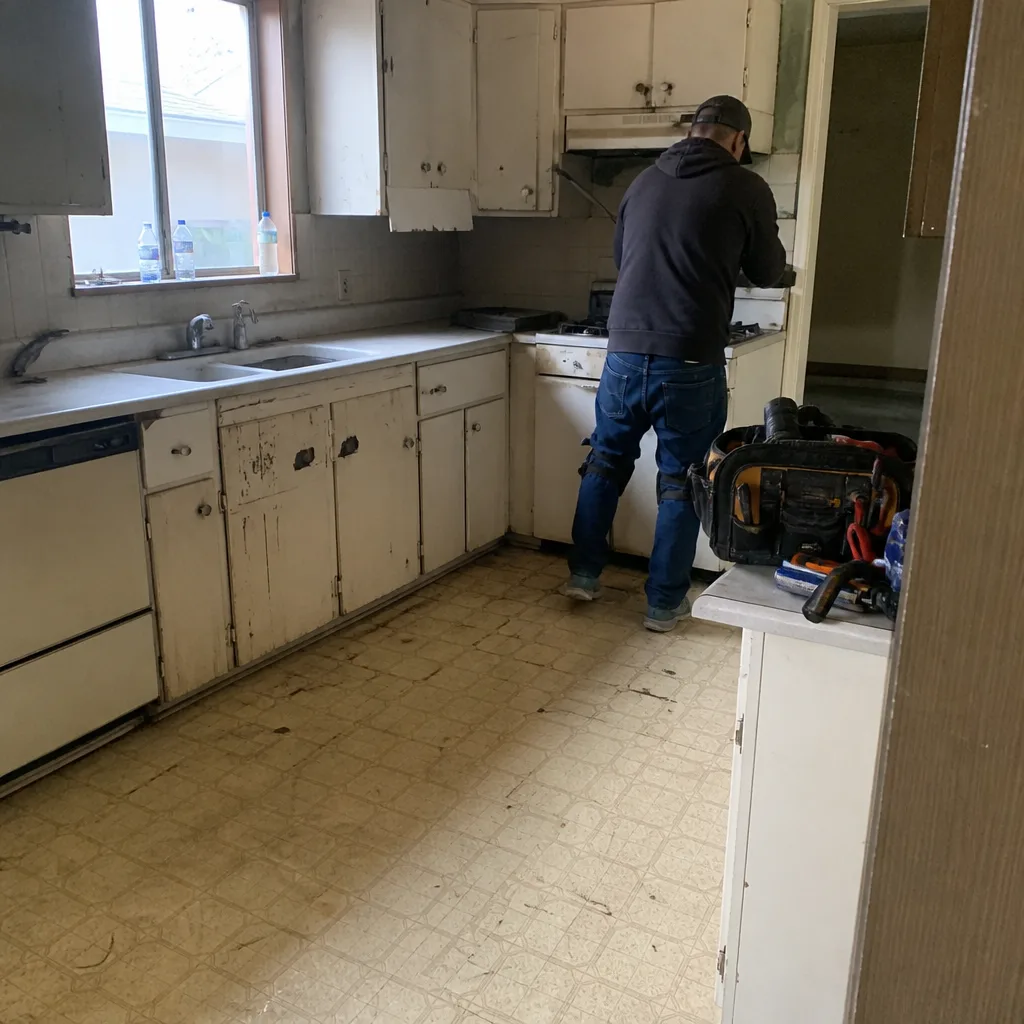 Before
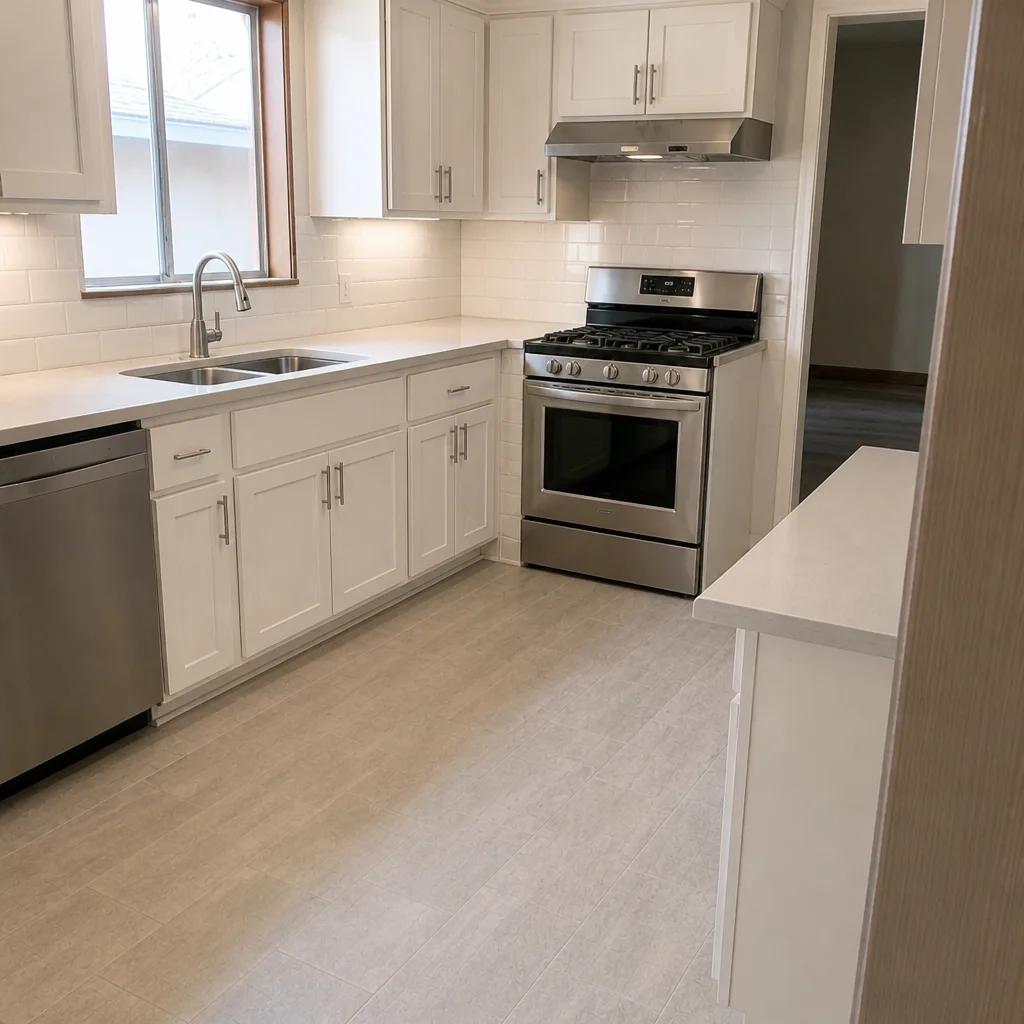 After
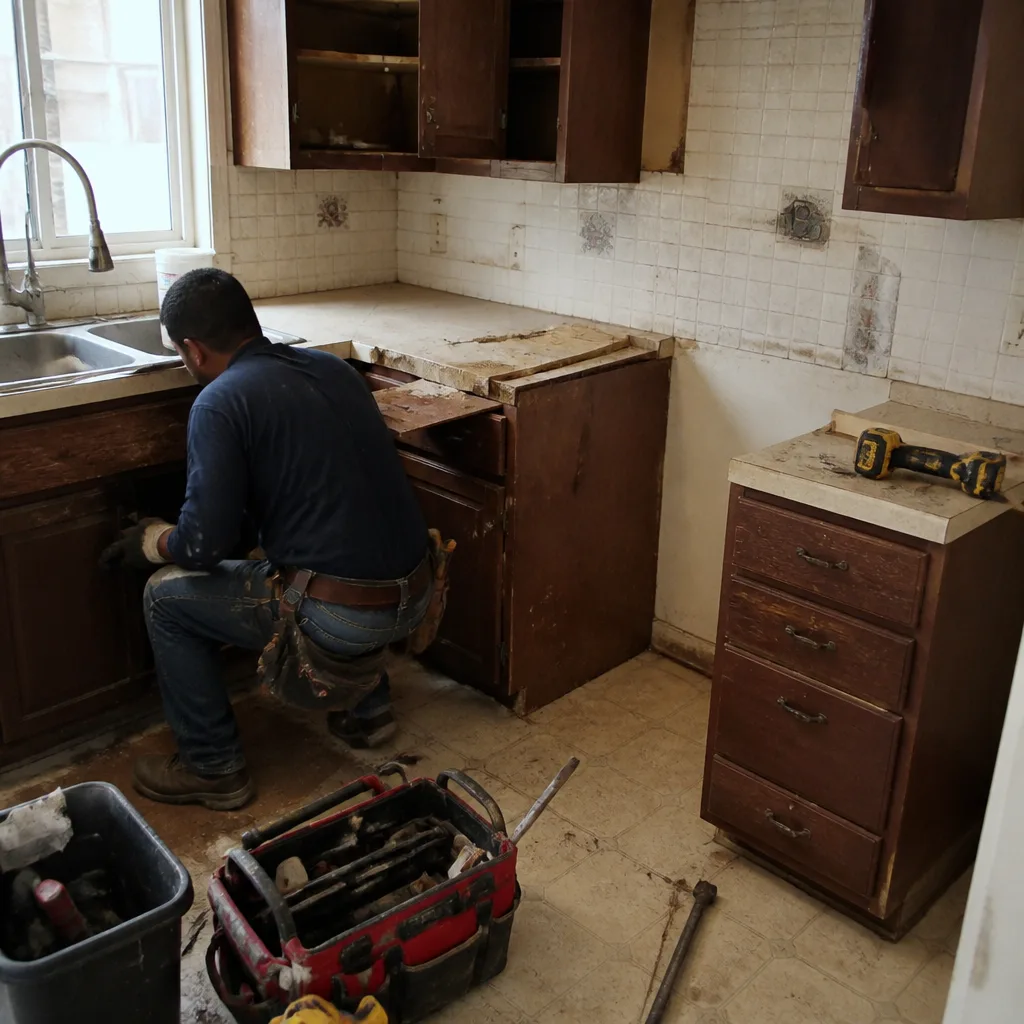 Before
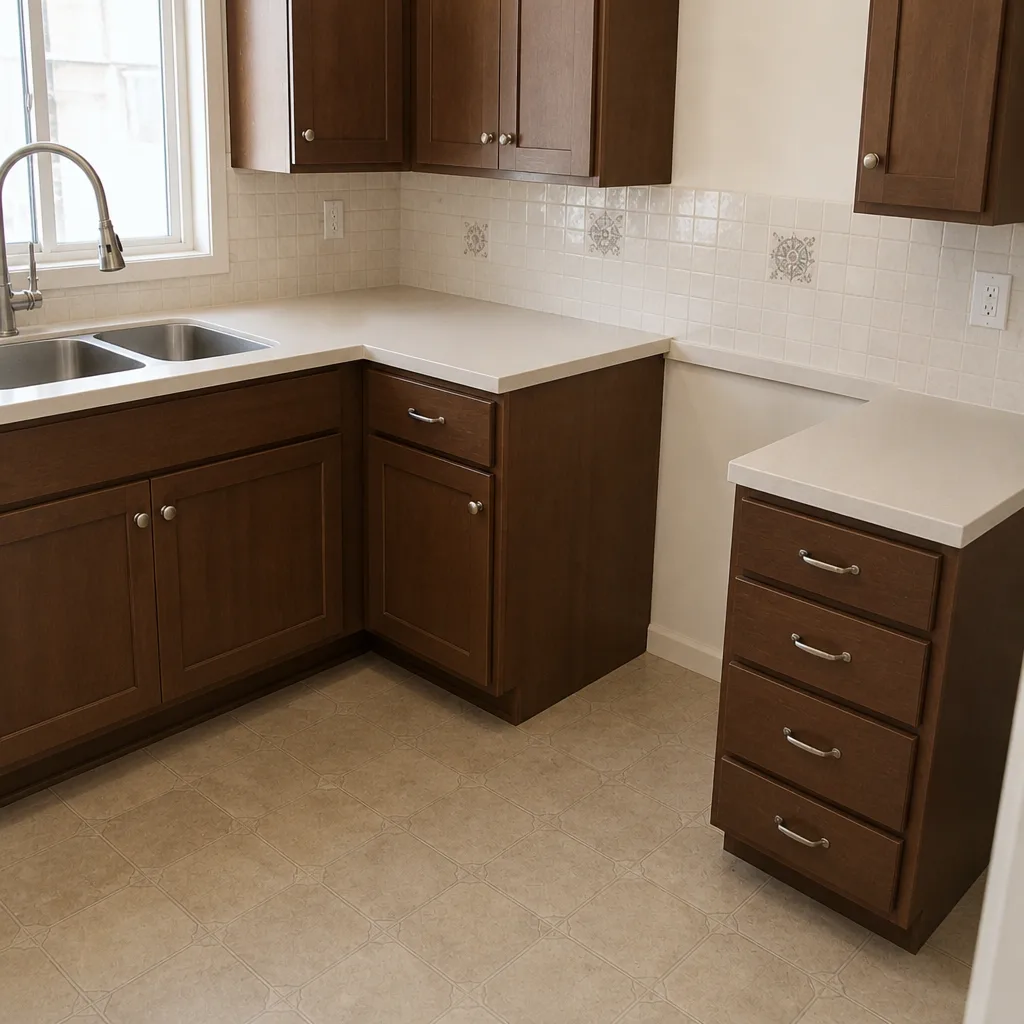 After
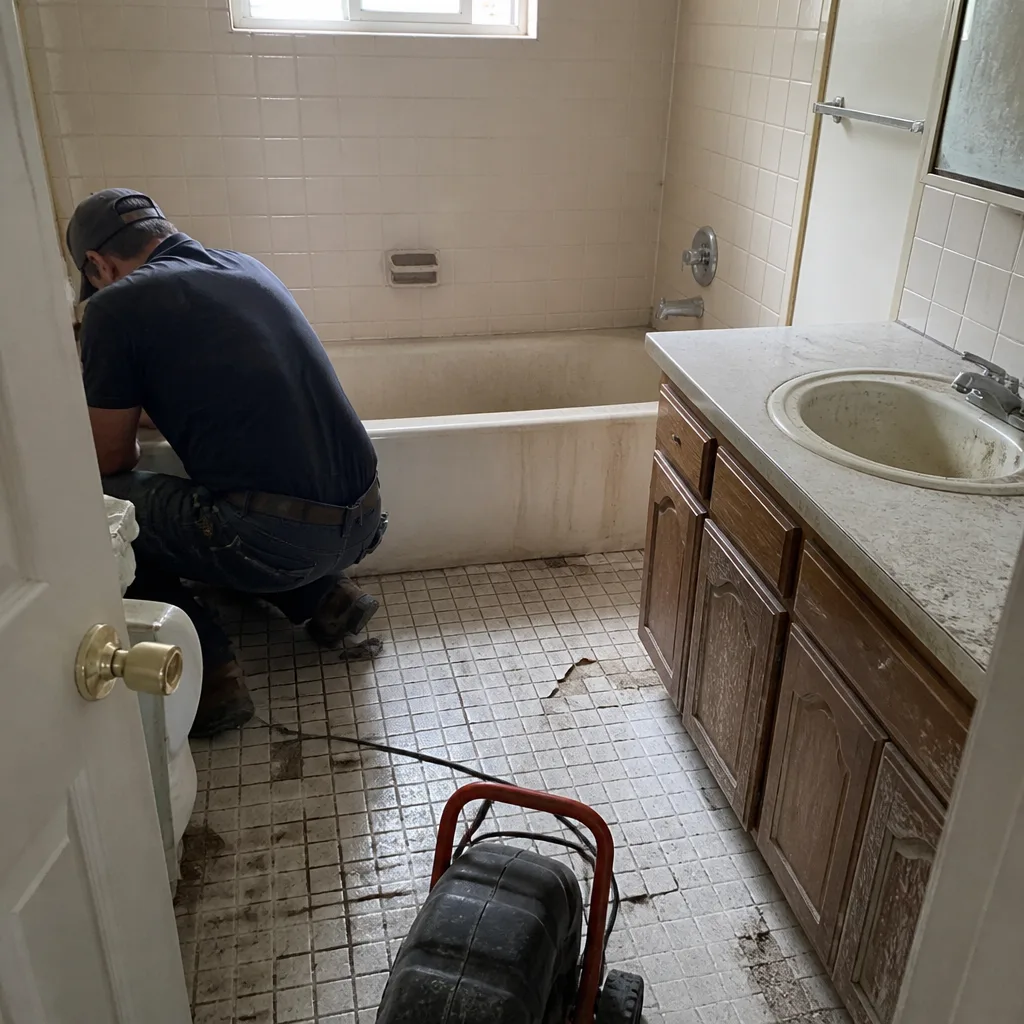 Before
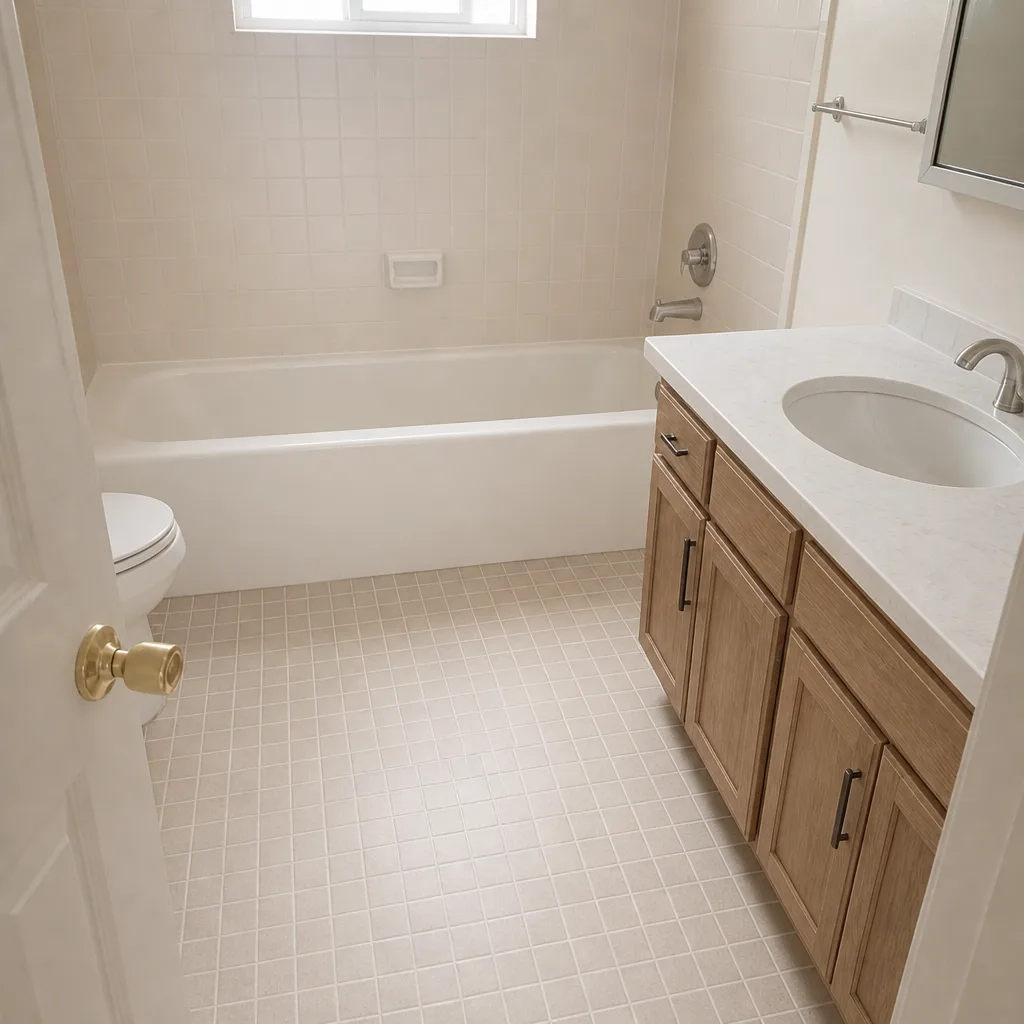 After
When to Call a Professional
Call a professional when the symptom keeps returning after a repair, when water is involved and you can’t find where it’s entering, when a frame is racked or a door keeps binding after adjustment, or when you see soft wood, cracking stucco around a unit, or stains that spread. Those point to structural and water-management causes that need a trained eye and a proper fix. Surface condensation and worn hardware are things you can handle. Failed flashing, out-of-square frames, and repeated leaks are not. Groundwork Construction Co. of Vacaville offers free estimates in Vacaville, and our technicians have up to 12 years of experience diagnosing exactly these problems. Call (888) 276-8078 to schedule your free estimate. We answer with a live person 24 hours a day, 7 days a week.
Frequently Asked Questions

If the fog is trapped between the panes, the insulated glass unit has failed and needs the glass replaced; on a sound frame, that’s a repair rather than a whole-window job. If the moisture is on the room-facing surface, it’s interior humidity meeting a cold pane and you fix it with ventilation and humidity control. Call (888) 276-8078 for an exact quote on a failed glass unit, and the estimate is free.
Seasonal sticking means the frame is moving with moisture and temperature changes, which usually points to settlement or a frame that wasn’t properly shimmed. In Vacaville’s clay soils, that seasonal swing shows up most years. Don’t plane the door before you know whether the frame is racked. Call (888) 276-8078 for a free diagnosis, because the fix depends entirely on the cause.
The leak almost certainly isn’t at the caulk joint; it’s entering at failed flashing or a bad rough opening above or beside the window and showing up where you can see it. Sealing the visible gap traps the water inside the wall. This is the exact pattern we find across older Vacaville homes. Call (888) 276-8078 to have it traced to the real source.
No. We use no-hassle upfront pricing, so the number you see is the number you pay, with no change-order surprises. For larger replacement projects, 0% financing for 18 months and $1,000 off projects over $10,000 are available to make the work manageable. Call (888) 276-8078 to schedule your free estimate and design consult.
Yes. Replacement work that touches the building envelope is generally permitted, and we handle the permitting and inspection process as part of the job. Confirm the specifics for your project during your free estimate, and we’ll walk you through exactly what’s required. Call (888) 276-8078 to get started.
It comes down to the frame: if the frame and rough opening are sound, a failed glass unit or worn hardware is a repair, and if the frame is rotten, out of square, or the whole home’s original windows are failing, replacement is the better investment. Our technicians have up to 12 years of experience making that call. Call (888) 276-8078 for a free assessment and an upfront number.
The Bottom Line
Window and door problems are almost always symptoms, and the visible problem is rarely the real one. A draft, a sticking door, a foggy pane, or a recurring leak each point back to one of three causes: failed water management at the flashing and rough opening, movement that racks frames and doors, or a genuine wear item like a seal or hardware. Diagnose the cause before you pick up a caulk gun or a plane, because a band-aid that hides a structural problem costs more to fix later. On a sound frame, a glass or hardware repair is the smart money. When frames, flashing, or the whole era of a Vacaville home is the issue, replacement earns its cost. If you’re not sure which you’re facing, that’s the moment to call. Groundwork Construction Co. of Vacaville offers free estimates backed by our 730-Day Done Right Promise. Call (888) 276-8078 to schedule yours today.
Written by the team at Groundwork Construction Co. of Vacaville.